



Entosphenus minimus (Bond & Kan, 1973)
Miller Lake lamprey
อัพโหลดของคุณ ภาพถ่าย และ วิดีโอ
รูปภาพหลายรูป | Google image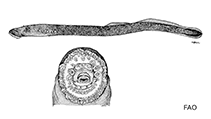 Entosphenus minimus
Male ภาพโดย FAO
รูปภาพหลายรูป | Google image
Male ภาพโดย FAO
การจำแนกประเภท / ชื่อ ชื่อสามัญ | ชื่อพ้อง | Catalog of Fishes(สกุล, ชนิด) | ITIS | CoL | WoRMS | Cloffa
> Petromyzontiformes (Lampreys) > Petromyzontidae (Northern lampreys) > Lampetrinae
Etymology: Entosphenus: entos (Gr.), within; sphenos (Gr.), wedge, referring to wedge-shaped tooth within mouth on tongue of E. tridentatus (See ETYFish); minimus: Latin for least, referring to small size, at 12.9 cm, the smallest known parasitic lamprey (See ETYFish).
Etymology: Entosphenus: entos (Gr.), within; sphenos (Gr.), wedge, referring to wedge-shaped tooth within mouth on tongue of E. tridentatus (See ETYFish); minimus: Latin for least, referring to small size, at 12.9 cm, the smallest known parasitic lamprey (See ETYFish).
สิ่งแวดล้อม : สิ่งแวดล้อม / เขตภูมิอากาศ / ระดับความลึก / ระยะการกระจายสินค้า นิเวศวิทยา
; น้ำจืด สัตว์น้ำหน้าดิน; สัตว์น้ำจืดที่มีการอพยพอย่างแท้จริงภายในแหล่งน้ำจืดเท่านั้น (Ref. 126106). Temperate; 43°N - 42°N
การแพร่กระจาย อาณาเขต | พื้นที่จำแนกตาม FAO | ระบบนิเวศหลายระบบ | การปรากฏขึ้น,การเกิดขึ้น,พบ | ตำแหน่งบนแผนที่ | การแนะนำ | Faunafri
North America: Miller Lake in USA.
ขนาด / น้ำหนัก / อายุ
วัยเจริญพันธุ์: Lm ? range ? - ? cm
Max length : 14.5 cm TL เพศผู้/กระเทย; (Ref. 89241); common length : 9.9 cm TL เพศผู้/กระเทย; (Ref. 12193); อายุสูงสุดที่ได้รายงาน: 3.00 ปี (Ref. 89241)
Max length : 14.5 cm TL เพศผู้/กระเทย; (Ref. 89241); common length : 9.9 cm TL เพศผู้/กระเทย; (Ref. 12193); อายุสูงสุดที่ได้รายงาน: 3.00 ปี (Ref. 89241)
คำอธิบายสั้นๆ เครื่องมือที่ใช้ในการแยกชนิดสัตว์,สิ่งมีชีวิตออกจากกัน | สัณฐานวิทยา | ความยาวต่างๆ
Adults: 7.2-14.5 cm TL; body proportions, as percentage of TL (based on 58 specimens 8.0-14.5 cm TL): 11.0-17.0 prebranchial length, 8.9-12.2 branchial length, 40.3-49.1 trunk length, 27.0-34.6 tail length, 2.1-3.3 eye length and 5.0-8.6 disc length; height of the second dorsal fin, as a percentage of TL, is significantly greater in mature (4.4-6.1) versus immature adults (2.2-4.2); urogenital papilla length (percentage of branchial length in 12 spawning males 7.8-10.0 cm TL): 10.0-18.8; trunk myomeres, 59-66. Adult dentition: supraoral lamina, 2-3 unicuspid teeth, usually 3, the median one smaller than the lateral ones; infraoral lamina, 5 unicuspid teeth; 4 endolaterals on each side; endolateral formula, typically 2-3-3-2; 2 rows of anterials; first row of anterials, 3 unicuspid teeth; exolaterals absent; single row of posterials, 11-19, usually with the outermost 1-3 posterials on either side bicuspid and the internal ones unicuspid, however, 0-16 can be bicuspid; transverse lingual lamina, 17-29 unicuspid teeth, the median one slightly enlarged; longitudinal lingual laminae each with 18-25 unicuspid teeth. Velar tentacles in adults, 5-9, without tubercles; wings consisting of a single short tentacle on either side; median tentacle shorter than the lateral ones immediately next to it; body coloration (preserved) in adults darker on the upper surface and paler on the lower surface with immature adults being yellowish brown, and with mature and spent adults being brownish purple; lateral line neuromasts unpigmented; extent of caudal fin pigmentation, 25% to <75%; caudal fin shape, spade-like or rounded; oral fimbriae, 86-101; oral papillae, 7-17 (Ref. 89241).
Body shape (shape guide): eel-like.
Body shape (shape guide): eel-like.
Freshwater; in the upper reaches of rivers at an elevation of 1,402-2,134 m. Ammocoetes are associated with substrates of organic detritus at water depths up to 1 m. Spawning has been observed both in lake and in stream habitats. Life span approximately 36 months; about 30 months as an ammocoete and 6 months as an adult. Metamorphosis occurs in the fall. Adults parasitic on fishes (native Gila bicolor, Rhinichthys osculus klamathensis, and introduced Salvelinus fontinalis, Salmo trutta) usually measuring much less than 15 cm TL. Because of the small size of the hosts and the deep nature of the wounds inflicted, most attacks likely result in the death of the fish being attacked. Also reported to be scavengers and cannibals. Adults apparently do not feed more than a few months. Spawning migration is very limited. Adults build redds about 10 cm wide by 3 cm deep, at a water depth of about 30 cm. The redds consist of gravel and sand. Spawning period between 17 July and 20 August in Miller Lake and 10 June in Sycan River; in the latter case, spawning occurred during mid-morning at a water temperature of 12 °C. Fecundity, 503-727 eggs/female. Adults die after spawning. The species was extirpated from Miller Lake through poisoning in 1958 because of its parasitism of planted trout fingerlings.
วงจรชีวิตและพฤติกรรมการผสมพันธุ์ วัยเจริญพันธุ์ | การสืบพันธุ์ | การวางไข่ | เซลสืบพันธ์ของเพศเมีย(ไข่) | ความดกของไข่ | ตัวอ่อน
Adults build redds about 10 cm wide by 3 cm deep consisting of gravel and sand, at a water depth of about 30 cm (Ref. 89241).
อ้างอิงหลัก
อัพโหลดข้อมูลอ้างอิงของคุณ | อ้างอิง | ผู้ประสานงาน | ผู้ร่วมมือ
Page, L.M. and B.M. Burr, 1991. A field guide to freshwater fishes of North America north of Mexico. Houghton Mifflin Company, Boston. 432 p. (Ref. 5723)
สถานะบัญชีแดงของ IUCN (Ref. 130435: Version 2025-2 (Global))
เปราะบาง (VU) (D2); Date assessed: 22 February 2012
CITES
Not Evaluated
ภัยคุกคามต่อมนุษย์
Harmless
การใช้ของมนุษย์
การประมง: ไม่มีผลประโยชน์
FAO - Publication: search | FishSource |
ข้อมูลเพิ่มเติม
นิเวศวิทยาเขตร้อน
รายการอาหาร (เหยื่อ)
องค์ประอบของอาหาร
การบริโภคอาหาร
การจัดสรรอาหาร
ผู้ล่า
รายการอาหาร (เหยื่อ)
องค์ประอบของอาหาร
การบริโภคอาหาร
การจัดสรรอาหาร
ผู้ล่า
พลวัตของประชากร
พารามิเตอร์การเจริญเติบโต
อายุสูงสุด / ขนาด
ความยาว-น้ำหนักสัมพันธ์
ความยาว-ความยาวสัมพันธ์
ความยาว-ความถี่
การแปลงมวล
การทดแทนที่
อุดมสมบรูณ์
พารามิเตอร์การเจริญเติบโต
อายุสูงสุด / ขนาด
ความยาว-น้ำหนักสัมพันธ์
ความยาว-ความยาวสัมพันธ์
ความยาว-ความถี่
การแปลงมวล
การทดแทนที่
อุดมสมบรูณ์
วงจรชีวิต
การสืบพันธุ์
วัยเจริญพันธุ์
ความสมบูรณ์พันธุ์/เหงือกที่เกี่ยวข้อง
ความดกของไข่
การวางไข่
การรวมตัวของสปอน
เซลสืบพันธ์ของเพศเมีย(ไข่)
การพัฒนาไข่
ตัวอ่อน
พลวัตของสัตว์น้ำวัยอ่อน
การสืบพันธุ์
วัยเจริญพันธุ์
ความสมบูรณ์พันธุ์/เหงือกที่เกี่ยวข้อง
ความดกของไข่
การวางไข่
การรวมตัวของสปอน
เซลสืบพันธ์ของเพศเมีย(ไข่)
การพัฒนาไข่
ตัวอ่อน
พลวัตของสัตว์น้ำวัยอ่อน
การแพร่กระจาย
อาณาเขต
พื้นที่จำแนกตาม FAO
ระบบนิเวศหลายระบบ
การปรากฏขึ้น,การเกิดขึ้น,พบ
การแนะนำ
BRUVS - วิดีโอ
อาณาเขต
พื้นที่จำแนกตาม FAO
ระบบนิเวศหลายระบบ
การปรากฏขึ้น,การเกิดขึ้น,พบ
การแนะนำ
BRUVS - วิดีโอ
กายวิภาคศาสตร์
พื้นที่เหงือก
สมอง
หินโสต
พื้นที่เหงือก
สมอง
หินโสต
สรีรวิทยา
องค์ประกอบของร่างกาย
สารอาหาร
การใช้ออกซิเจน
ประเภทการว่ายน้ำ
ระดับความเร็วในการว่ายน้ำ
เม็ดสีที่มองเห็นได้
เสียงปลา
โรคและปรสิต
ความเป็นพิษ (LC50s)
องค์ประกอบของร่างกาย
สารอาหาร
การใช้ออกซิเจน
ประเภทการว่ายน้ำ
ระดับความเร็วในการว่ายน้ำ
เม็ดสีที่มองเห็นได้
เสียงปลา
โรคและปรสิต
ความเป็นพิษ (LC50s)
พันธุศาสตร์
จีโนม
พันธุศาสตร์
ความไม่สมดุลทางเชื้อชาติ
อัตราพันธุกรรม
ความหลากหลายทางพันธุกรรม
จีโนม
พันธุศาสตร์
ความไม่สมดุลทางเชื้อชาติ
อัตราพันธุกรรม
ความหลากหลายทางพันธุกรรม
เกี่ยวข้องกับมนุษย์
ระบบการเพาะเลี้ยงสัตว์น้ำ
ประวัติการเพาะเลี้ยงสัตว์น้ำ
สายพันธุ์
กรณีซิเกวเทอรา
แสตมป์ เหรียญ อื่นๆ
ระบบการเพาะเลี้ยงสัตว์น้ำ
ประวัติการเพาะเลี้ยงสัตว์น้ำ
สายพันธุ์
กรณีซิเกวเทอรา
แสตมป์ เหรียญ อื่นๆ
เครื่องมือ
หนังสืออิเล็กทรอนิกส์ | คู่มือภาคสนาม | เครื่องมือที่ใช้ในการแยกชนิดสัตว์,สิ่งมีชีวิตออกจากกัน | ผู้มีความชำนาญในเรื่องความถี่ของความยาว | เครื่องมือในการศึกษาชีวประวัติ | ตำแหน่งบนแผนที่ |
จับ-MSY |
รายงานพิเศษ
ตรวจสอบการบำรุงรักษาตู้ปลา | ตรวจสอบเอกสารข้อเท็จจริงเกี่ยวกับสายพันธุ์ | ตรวจสอบเอกสารข้อเท็จจริงเกี่ยวกับการเพาะเลี้ยงสัตว์น้ำ
ดาวน์โหลด XML
หน้าสรุป | ข้อมูลสำคัญ | ชื่อสามัญ | ภาพถ่าย
แหล่งที่มาจากอินเตอร์เน็ต
AFORO (otoliths) | Aquatic Commons | BHL | Cloffa | Websites from users | Check FishWatcher | CISTI | Catalog of Fishes: สกุล, ชนิด | DiscoverLife | ECOTOX | FAO - Publication: search | Faunafri | Fishipedia | Fishtrace | GloBI | Google Books | Google Scholar | Google | IGFA World Record | OneZoom | Open Tree of Life | Otolith Atlas of Taiwan Fishes | PubMed | Reef Life Survey | Socotra Atlas | TreeBase | แผนภูมิชีวิตแบบต้นไม้ | Wikipedia: Go, ค้นหา | World Records Freshwater Fishing | บันทึกทางด้านสัตววิทยา
การประมาณค่าตามแบบจำลอง
ดัชนีความหลากหลายทางวิวัฒนาการ (อ้างอิง 82804): PD50 = 0.5156 [Uniqueness, from 0.5 = low to 2.0 = high].
Bayesian length-weight: a=0.00132 (0.00060 - 0.00290), b=2.99 (2.80 - 3.18), in cm total length, based on LWR estimates for this (Sub)family-body shape (Ref. 93245).
ระดับชั้นอาหาร (อ้างอิง 69278): 3.9 ±0.7 se; based on size and trophs of closest relatives
ความสามารถในการกลับคืนสู่ปกติ (อ้างอิง 120179): ต่ำ, เวลาต่ำสุดที่จะทำให้ประชากรเพิ่มขึ้นเป็น 2 เท่าใช้เวลา 4.5 - 14 ปี (Semelparous species, assuming tm (= tmax) > 4).