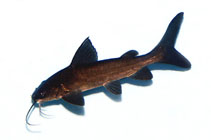
>
Siluriformes (Catfishes) >
Ariidae (Sea catfishes) > Ariinae
Eponymy: Dr Eduard Gräffe (1833–1916) was born in Switzerland, died in part of the Austro-Hungarian Empire (Slovenia) but regarded himself as an Austrian. [...] (Ref. 128868), visit book page.
More on authors: Kner & Steindachner.
Environment: milieu / climate zone / rango de profundidad / distribution range
Ecología
marino; agua dulce; salobre demersal; pH range: 7.5 - 8.2; dH range: 18 - 30; anadromo. Tropical; 24°C - 32°C (Ref. 2059); 3°S - 19°S
Western Pacific: northern Australia and southern New Guinea.
Tamaño / Peso / Age
Madurez: Lm ? range ? - ? cm
Max length : 60.0 cm SL macho / no sexado; (Ref. 44894)
Espinas dorsales (total) : 1; Radios blandos dorsales (total) : 7; Espinas anales: 0; Radios blandos anales: 15 - 19.
Body shape (shape guide): fusiform / normal.
Adults inhabit freshwater rivers and lagoons, as well as brackish estuaries and coastal marine waters. Can tolerate temperatures from 11°C to 38°C. Large groups of juveniles are often encountered (Ref. 44894). Feed on arthropods, insects, aquatic plants, mollusks, prawns, crayfish, fishes and bottom detritus. Nest is constructed among gravel where eggs are deposited forming a mound (Ref. 205). The only species among oral incubating ariids exhibiting no parental care (Ref. 205). Breeding takes place from September to February (Ref. 44894). Marine populations of A. graeffei appear to undertake extensive anadromous migrations associated with breeding, but no such movements were observed in the fluviatile population studied (Ref. 38559).
Life cycle and mating behavior
Madurez | Reproducción | Puesta | Huevos | Fecundidad | Larva
Nest is constructed among gravel where eggs are deposited forming a mound (Ref. 205). The only species among oral incubating Ariidae exhibiting no parental care (Ref. 205).
Allen, G.R., 1989. Freshwater fishes of Australia. T.F.H. Publications, Inc., Neptune City, New Jersey. (Ref. 5259)
IUCN Red List Status (Ref. 130435: Version 2025-1)
Threat to humans
Traumatogenic (Ref. 58010)
Human uses
Herramientas
Special reports
Download XML
Fuentes de Internet
Estimates based on models
Preferred temperature (Referencia
123201): 26.7 - 28.7, mean 27.9 °C (based on 270 cells).
Phylogenetic diversity index (Referencia
82804): PD
50 = 0.5312 [Uniqueness, from 0.5 = low to 2.0 = high].
Bayesian length-weight: a=0.00794 (0.00381 - 0.01658), b=3.08 (2.91 - 3.25), in cm total length, based on LWR estimates for this (Sub)family-body shape (Ref.
93245).
Nivel trófico (Referencia
69278): 3.6 ±0.2 se; based on diet studies.
Resiliencia (Referencia
120179): Medio, población duplicada en un tiempo mínimo de 1.4-4.4 años (Preliminary K or Fecundity.).
Fishing Vulnerability (Ref.
59153): Moderate to high vulnerability (49 of 100).
🛈