Environment: milieu / climate zone / ລະດັບຄວາມເລິກ / distribution range
ນິເວດວິທະຍາ
ສັດທະເລ; ນ້ຳກ່ອຍ pelagic-neritic; ລະດັບຄວາມເລິກ 0 - 50 m (Ref. 189). Subtropical; 36°N - 20°N, 121°W - 110°W (Ref. 189)
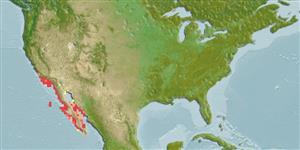
Eastern Central Pacific: Morro Bay, California (Ref. 2850) to Magdalena Bay, Baja California, Mexico.
ຂະໜາດ / ນ້ຳໜັກ / Age
ການຈະເລີນເຕັມໄວ: Lm ? range ? - ? cm
Max length : 13.3 cm SL ຕົວຜູ້/ບໍ່ມີເພດ; (Ref. 9298); common length : 10.0 cm SL ຕົວຜູ້/ບໍ່ມີເພດ; (Ref. 9298); ອາຍຸສູງສຸດທີ່ເຄຍລາຍງານມາ: 6 ປີ (Ref. 72482)
ຄີ (ໜາມ)ແຂງຢູ່ຫຼັງປາ (ທັງໝົດ) : 0; ຄີ(ໜາມ) ແຂງຢູ່ຄີກົ້ນປາ
ກຸ່ມປາກະດູກແຂງ
ຄວາມຖີ່ຂອງກຸ່ມຖ່າຍທອດພັນ
ປາທີ່ມີການເຄື່ອນຍ້າຍຈາກທະເລໄປຫານ້ຳຈືດ ແລະນ້ຳຈືດຫາທະເລ
ປາທີ່ມີການເຄື່ອນຍ້າຍຈາກທະເລແລະໄປໄຂ່ຢູ່ນ້ຳຈືດ
ຄີກົ້ນຂອງປາ
ສັດທີ່ມີກະດູກສັນຫັຼງ
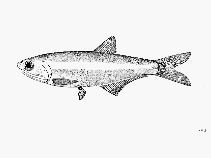
ການຖ່າຍທອດທາງກຳມະພັນຈາກພໍ່ແມ່ຫາລູກ: 0; ຄີກົ້ນຂອງປາ: 27 - 34. Moderately deep. Snout pointed, about 1/2 to 3/4 eye diameter; maxilla moderate, tip rather blunt, not reaching to hind border of pre-operculum; pseudobranch short, covered by skin; gill cover canals of panamensis-type. Anal fin origin a little before midpoint of dorsal fin base. A bright silver stripe along flank, often as wide as eye, not fading on preservation.
Body shape (shape guide): elongated; Cross section: oval.
A schooling species most commonly found in bays and inlets (the fourth most abundant fish taken by various gear in Newport Bay, California; its eggs are the most abundant of 7 species sampled, especially in May). The ovarian eggs are spherical. Eggs and larvae are planktonic (Ref. 35602). Feeds on plankton (Ref. 8593). Basically filter-feeders, but at times have been observed feeding by selection (Ref. 4930). Normally used as bait (Ref. 9298).
Life cycle and mating behavior
ການຈະເລີນເຕັມໄວ | ການສືບພັນ | ການວາງໄຂ່ | ໄຂ່ | ຄວາມດົກຂອງໄຂ່ປາ | ຕົວອ່ອນ
Oviparous (Ref. 35602). Spawn in school (Ref. 205).
Whitehead, P.J.P., G.J. Nelson and T. Wongratana, 1988. FAO Species Catalogue. Vol. 7. Clupeoid fishes of the world (Suborder Clupeoidei). An annotated and illustrated catalogue of the herrings, sardines, pilchards, sprats, shads, anchovies and wolf-herrings. FAO Fish. Synop. 125(7/2):305-579. Rome: FAO. (Ref. 189)
IUCN Red List Status (Ref. 130435: Version 2025-1)
Threat to humans
Harmless
Human uses
ການປະມົງ: bycatch; ເຍື່ອ: usually
ເຄື່ອງມື
Special reports
Download XML
ແຫຼ່ງອີນເຕີເນັດ
Estimates based on models
Preferred temperature (ເອກະສານອ້າງອີງ
123201): 13.2 - 21.6, mean 17.7 °C (based on 12 cells).
Phylogenetic diversity index (ເອກະສານອ້າງອີງ
82804): PD
50 = 0.5000 [Uniqueness, from 0.5 = low to 2.0 = high].
Bayesian length-weight: a=0.00513 (0.00234 - 0.01125), b=3.14 (2.97 - 3.31), in cm total length, based on LWR estimates for this Genus-body shape (Ref.
93245).
ຊັ້ນເຂດຮ້ອນ (ເອກະສານອ້າງອີງ
69278): 3.4 ±0.45 se; based on food items.
ຄວາມຢືດຢຸ່ນ (ເອກະສານອ້າງອີງ
120179): ສູງ, ປະຊາກອນຕຳ່ສຸດທີ່ໃຊ້ເວລາສອງໜ້ອຍກວ່າ 15 ເດືອນ (Preliminary K or Fecundity.).
Fishing Vulnerability (Ref.
59153): Low vulnerability (10 of 100).
🛈
Nutrients (Ref.
124155): Calcium = 192 [123, 439] mg/100g; Iron = 1.91 [1.08, 3.46] mg/100g; Protein = 17.9 [15.6, 20.6] %; Omega3 = 0.499 [0.277, 0.934] g/100g; Selenium = 17.2 [8.1, 37.9] μg/100g; VitaminA = 20.4 [6.6, 54.1] μg/100g; Zinc = 1.36 [0.94, 2.07] mg/100g (wet weight);