



Crossorhombus howensis Hensley & Randall, 1993
Lord Howe Island flounder
ارفع صور و مقاطع فيديو
صور | صور قوقل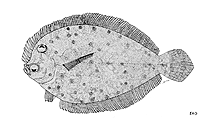 Crossorhombus howensis
صورة بواسطة FAO
صور | صور قوقل
صورة بواسطة FAO
التصنيف / الأسماء الأسماء الشائعة | مرادفات | Catalog of Fishes(جنس, الانواع) | ITIS | CoL | WoRMS | Cloffa
> Pleuronectiformes (Flatfishes) > Bothidae (Lefteye flounders)
Etymology: Crossorhombus: Greek krossoi = tassel + Greek, rhombos = paralelogram (Ref. 45335).
More on authors: Hensley & Randall.
Etymology: Crossorhombus: Greek krossoi = tassel + Greek, rhombos = paralelogram (Ref. 45335).
More on authors: Hensley & Randall.
البيئة: الوسط / المنطقة المناخية / نطاق العمق / نطاق التوزيع البيئة
بحري القاع; نطاق العمق ? - 8 m (Ref. 9824). Temperate
التوزيع الأقاليم | مناطق الفاو | النظام البيئي | الظهور | نقطة علي الخريطة | مقدمة | Faunafri
Northwest Pacific: Taiwan. Southwest Pacific: Lord Howe Island. Possibly occurring in the Western Central Pacific.
الحجم / وزن / العمر
وصف مختصر مفاتيح التعريف | الوصف الخارجي | قياسات المظهر الخارجي
الأشعة الظهرية الناعمة (المجموع) : 85 - 88; أشعه شرجية لينه: 64 - 69. Head and body on eyed side tan to grey with many small dark specks and spots. A series of dark spots very close to dorsal and ventral edges of body. About 4 or 5 spots along straight section of lateral line. Dorsal, anal, and caudal fin light coloured with small dark specks. Flaps on eyes of males with dark spots. Blind side of females tan to whitish. Males with distinct bluish black V-shaped mark on blind side. Ventral arm of "V" wider than dorsal arm. Body ovoid, its depth about 1.7 times SL. Head small, snout shorter than eye, profile steep anterior to interorbital area. Head length 3.9 to 4.2 times SL. Interorbital region broad and concave, probably wider in males than females. Males with a rostral spine and several small orbital spines. Both eyes on left side of head, front margin of upper eye over middle of lower eye. Flaps on posterior areas of eyes in males. Mouth small, reaching to below anterior margin of lower eye, length of upper jaw 3.5 to 4.1 times in head length. Teeth of upper jaw biserial, teeth of outer row more widely spaced than teeth of inner row. Teeth in lower jaw uniserial. Gill rakers short. Scales on eyed side with long ctenii. Scales on blind side cycloid. Pectoral fin on eye side with 11 or 12 rays and on blind side with 9 or 10 rays (Ref 42535).
Body shape (shape guide): short and / or deep.
Body shape (shape guide): short and / or deep.
Lives on silty sand bottoms and feeds on bottom-living animals. Only known from specimens collected from divers. Sexually dimorphic characters possibly develop at about 6-7 cm SL.
دورة الحياة وسلوك التزاوج النضج | التكاثر | وضع البيض | بيض | الخصوبة | اليرقات
المرجع الرئيسي
قم بتحميل مراجعك | مراجع | المنظم : Amaoka, Kunio | المتعاونين
Hensley, D.A. and K. Amaoka, 2001. Bothidae. Lefteye flounders. p. 3799-3841. In K.E. Carpenter and V. Niem (eds.) FAO species identification guide for fishery purposes. The living marine resources of the Western Central Pacific. Vol. 6. Bony fishes part 4 (Labridae to Latimeriidae), estuarine crocodiles. FAO, Rome. (Ref. 9824)
حالة القائمة الحمراء للاتحاد الدولي لحفظ الطبيعة والموارد الطبيعية (Ref. 130435: Version 2025-2 (Global))
نقص البينات (DD) ; Date assessed: 11 November 2019
CITES
Not Evaluated
خطر للأنسان
Harmless
استخدامات بشرية
مصائد: غير ذات اهمية
FAO - Publication: search | FishSource |
مزيد من المعلومات
علم البيئة الغذائية
المواد الغذائية (الفرائس)
التركيبة الغذائية
استهلاك الأغذية
الحصص الغذائية
مفتريسات
المواد الغذائية (الفرائس)
التركيبة الغذائية
استهلاك الأغذية
الحصص الغذائية
مفتريسات
الديناميكيات السكانية
معاملات النمو
الحد الأقصى للأعمار/الأحجام
علاقة الطول بالوزن.
علاقة الطول بالطول.
الطول- الترددات
التحويل الجماعي
توظيف
الوفرة
معاملات النمو
الحد الأقصى للأعمار/الأحجام
علاقة الطول بالوزن.
علاقة الطول بالطول.
الطول- الترددات
التحويل الجماعي
توظيف
الوفرة
دورة الحياة
التكاثر
النضج
النضج/الخياشيم المتعلقة.
الخصوبة
وضع البيض
تجمعات التفريخ
بيض
تطور البيضة
اليرقات
حركة انتقال اليرقات
التكاثر
النضج
النضج/الخياشيم المتعلقة.
الخصوبة
وضع البيض
تجمعات التفريخ
بيض
تطور البيضة
اليرقات
حركة انتقال اليرقات
التشريح
منطقة الخياشيم
الدماغ
الأوتوليث
منطقة الخياشيم
الدماغ
الأوتوليث
علم وظائف الأعضاء
تكوين الجسم
المغذيات
استهلاك الأوكسجين
نوع السباحة
سرعة السباحة
الأصباغ البصرية
صوت السمك
الأمراض والطفيليات
السمية (LC50s)
تكوين الجسم
المغذيات
استهلاك الأوكسجين
نوع السباحة
سرعة السباحة
الأصباغ البصرية
صوت السمك
الأمراض والطفيليات
السمية (LC50s)
جيني
الوراثة
جيني
التغاير
التوريث
التنوع الوراثي
الوراثة
جيني
التغاير
التوريث
التنوع الوراثي
ذات الصلة بالبشر
أنظمة الاستزراع المائي
ملامح تربية الأحياء المائية
سلالات
حالات سيغواتيرا
طوابع بريدية وعملات معدنية ومتنوعة
أنظمة الاستزراع المائي
ملامح تربية الأحياء المائية
سلالات
حالات سيغواتيرا
طوابع بريدية وعملات معدنية ومتنوعة
أدوات
كتاب إلكتروني | دليل الميدان | مفاتيح التعريف | معالج تردد الطول-التردد | أداة تاريخ الحياة | نقطة علي الخريطة |
Catch-MSY |
تقارير خاصة
البحث عن صيانت الأحواض المائيه | التحقق من وجود صفحات حقائق الأنواع | البحث عنا حقائق حول الأحواض المائيه
تنزيل XML
مصادر علي الأنترنت
AFORO (otoliths) | Aquatic Commons | BHL | Cloffa | Websites from users | البحث في مراقبي الأسماك | CISTI | Catalog of Fishes: جنس, الانواع | DiscoverLife | ECOTOX | FAO - Publication: search | Faunafri | Fishipedia | Fishtrace | GloBI | Google Books | Google Scholar | Google | IGFA World Record | قاعدة البينات الوطنية | OneZoom | Open Tree of Life | Otolith Atlas of Taiwan Fishes | PubMed | Reef Life Survey | Socotra Atlas | TreeBase | شجرة الحياة | Wikipedia: ذهب, بحث | World Records Freshwater Fishing | Zoobank | سجلات علم الحيوانات
تقديرات تستند إلى النماذج
مؤشر التنوع الشُعبي الوراثي (مرجع 82804): PD50 = 0.5312 [Uniqueness, from 0.5 = low to 2.0 = high].
Bayesian length-weight: a=0.00912 (0.00412 - 0.02018), b=3.05 (2.87 - 3.23), in cm total length, based on LWR estimates for this (Sub)family-body shape (Ref. 93245).
مستوى غذائي (مرجع 69278): 3.5 ±0.37 se; based on food items.
المرونه (مرجع 120179): وسيط, الحد الزمني الأدني لتضاعف عدد أفراد المجتمع 1.4-4.4 سنة (Preliminary K or Fecundity.).