



Sardinella lemuru Bleeker, 1853
Bali sardinella
Добавить Ваши наблюдения в Fish Watcher
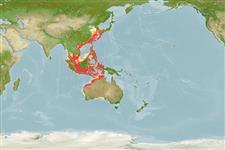
| Native range | All suitable habitat | Point map | Year 2050 |
|
| This map was computer-generated and has not yet been reviewed. |
| Sardinella lemuru AquaMaps Data sources: GBIF OBIS |
Загрузить свой Фото и Видео
изображения | Изображение на Google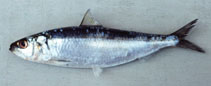 Sardinella lemuru
Изображение сделано Gloerfelt-Tarp, T.
изображения | Изображение на Google
Изображение сделано Gloerfelt-Tarp, T.
Классификация / Имена народные названия | синонимы | Catalog of Fishes(род, виды) | ITIS | CoL | WoRMS | Cloffa
> Clupeiformes (Herrings) > Dorosomatidae (Gizzard shads and sardinellas)
Etymology: Sardinella: Latin and Greek, sarda = sardine; name related to the island of Sardinia; diminutive (Ref. 45335).
More on author: Bleeker.
Etymology: Sardinella: Latin and Greek, sarda = sardine; name related to the island of Sardinia; diminutive (Ref. 45335).
More on author: Bleeker.
Окружающая среда: среда / климатическая зона / пределы глубины / диапазон распространения экология
морской pelagic-neritic; мигрирует в океане (Ref. 51243); пределы глубины 15 - 100 m (Ref. 12260). Tropical; 38°N - 33°S, 97°E - 134°E (Ref. 54869)
распространение Территории | регионы FAO | Экосистемы | места находок | карта точек | интродукции | Faunafri
Eastern Indian Ocean: Phuket, Thailand; southern coasts of East Java and Bali; and Western Australia. Western Pacific: Java Sea, Philippines, Hong Kong, Taiwan Island, southern Japan. Can not be distinguished as yet on morphological grounds from Sardinella aurita which occurs in the Atlantic Ocean.
Длина при первой зрелости / Размер / Вес / Возраст
половая зрелость: Lm 14.3, range 14 - 15 cm
Max length : 23.0 cm SL самец/пол неопределен; (Ref. 188); common length : 20.0 cm SL самец/пол неопределен; (Ref. 188)
Max length : 23.0 cm SL самец/пол неопределен; (Ref. 188); common length : 20.0 cm SL самец/пол неопределен; (Ref. 188)
Краткое описание определительные ключи | морфология | морфометрия
колючие лучи спинного плавника (общее число) : 0; членистые (мягкие) лучи спинного плавника (общее число) : 13 - 21; колючие лучи анального плавника: 0; членистые (мягкие) лучи анального плавника: 12 - 23. A faint golden spot behind gill opening, followed by a faint golden mid-lateral line; a distinct black spot at hind border of gill cover (absence of pigment). Body elongate, sub-cylindrical. Distinguished from all other clupeids in the eastern Indian Ocean and western Pacific by its pelvic fin ray count of i 8; from S. longiceps by its shorter head length and fewer lower gill rakers.
Body shape (shape guide): fusiform / normal; Cross section: compressed.
Body shape (shape guide): fusiform / normal; Cross section: compressed.
Adults form large schools in coastal waters, particularly in the Bali Strait upwelling. Found in sheltered bays and lagoons (Ref. 48635). They feed on phytoplankton and zooplankton, chiefly copepods. Time series analysis (Ref. 9586) suggests that recruitment fluctuations are related to ENSO events, as defined in Ref. 9577, 9578 and 9580.
Жизненный цикл и брачное поведение половая зрелость | размножение | нерест | икра | Плодовитость | личинки
Spawning tends to take place in inshore waters where salinity is low (Ref. 6863) at the beginning of the rainy season. Spawning aggregations may be formed, also including Amblygaster sirm, A. leogaster and Clupea fimbriata.
Основная ссылка
Загрузите свои рекомендации | ссылки | координатор | соавторы
Whitehead, P.J.P., 1985. FAO Species Catalogue. Vol. 7. Clupeoid fishes of the world (suborder Clupeoidei). An annotated and illustrated catalogue of the herrings, sardines, pilchards, sprats, shads, anchovies and wolf-herrings. FAO Fish. Synop. 125(7/1):1-303. Rome: FAO. (Ref. 188)
Статус Красного Списка МСОП (Ref. 130435: Version 2025-2 (Global))
Близок к исчезновению (NT) (A2bd); Date assessed: 15 February 2017
CITES
Not Evaluated
Угроза для людей
Harmless
Использование человеком
рыболовство: важный объект промысла
FAO - рыболовство: посадки, Видовой профиль; Publication: search | FishSource | Море вокруг нас
дополнительная информация
Трофическая экология
Пищевые предметы (добыча)
состав пищи
потребление пищи
Продовольственные пайки
хищники
Пищевые предметы (добыча)
состав пищи
потребление пищи
Продовольственные пайки
хищники
Динамика численности населения
Параметры роста
Макс. возраст / размер
Отношение длины к весу.
Отношение длины к длине.
Размерный состав
Преобразование массы
пополнение
численность
Параметры роста
Макс. возраст / размер
Отношение длины к весу.
Отношение длины к длине.
Размерный состав
Преобразование массы
пополнение
численность
Жизненный цикл
размножение
половая зрелость
Зрелость/Жиры относительно.
Плодовитость
нерест
Нерестовые скопления
икра
Развитие икры
личинки
динамика численности личинок
размножение
половая зрелость
Зрелость/Жиры относительно.
Плодовитость
нерест
Нерестовые скопления
икра
Развитие икры
личинки
динамика численности личинок
Анатомия
жаберная область
Мозг
Отолит
жаберная область
Мозг
Отолит
Физиология
Состав тела
Питательные вещества
Потребление кислорода
Тип плавания
Скорость плавания
Зрительные пигменты
Звук рыбы
Болезни и паразиты
Токсичность (LC50s)
Состав тела
Питательные вещества
Потребление кислорода
Тип плавания
Скорость плавания
Зрительные пигменты
Звук рыбы
Болезни и паразиты
Токсичность (LC50s)
Связанные с человеком
Системы аквакультуры
особенности рыбоводства
степень растяжения
Случаи заболевания сигуатерой
Марки, монеты и прочее.
Системы аквакультуры
особенности рыбоводства
степень растяжения
Случаи заболевания сигуатерой
Марки, монеты и прочее.
инструменты
Электронная книга | полевой определитель | определительные ключи | Длина-Частота | онтогенез | карта точек |
Catch-MSY |
Специальные отчеты
Проверить содержание в аквариумах | Проверить опубликованные видовые данные | Проверить опубликованные данные по аквакультуре
Скачать в формате XML
ресурсы в Интернет
AFORO (otoliths) | Aquatic Commons | BHL | Cloffa | Websites from users | Проверить FishWatcher | CISTI | Catalog of Fishes: род, виды | DiscoverLife | ECOTOX | FAO - рыболовство: посадки, Видовой профиль; Publication: search | Faunafri | Fishipedia | Fishtrace | GloBI | Google Books | Google Scholar | Google | IGFA World Record | национальные базы данных | OneZoom | Open Tree of Life | Otolith Atlas of Taiwan Fishes | PubMed | Reef Life Survey | Socotra Atlas | TreeBase | Tree of Life | Wikipedia: Вперёд, поиск | World Records Freshwater Fishing | Zoobank | Зоологическая летопись
Оценки, основанные на моделях
Предпочтительная температура (ссылка 123201): 22.8 - 28.6, mean 27.8 °C (based on 500 cells).
Индекс филогенетического разнообразия (ссылка 82804): PD50 = 0.5000 [Uniqueness, from 0.5 = low to 2.0 = high].
Bayesian length-weight: a=0.00724 (0.00467 - 0.01123), b=3.10 (2.97 - 3.23), in cm total length, based on LWR estimates for this species & Genus-body shape (Ref. 93245).
Трофический уровень (ссылка 69278): 2.5 ±0.00 se; based on food items.
Generation time: 1.1 (1.0 - 1.3) years. Estimated as median ln(3)/K based on 18 growth studies.
устойчивость к внешним воздействиям (ссылка 120179): высокий, минимальное время удвоения популяции до 15 месяцев (K=0.8-1.3; tmax=4.5).
Prior r = 1.19, 95% CL = 0.79 - 1.79, Based on 6 data-limited stock assessments.
Питательные вещества (Ref. 124155): Calcium = 257 [134, 389] mg/100g; Iron = 1.99 [1.18, 3.52] mg/100g; Protein = 20.3 [19.3, 21.3] %; Omega3 = 0.286 [0.140, 0.547] g/100g; Selenium = 114 [61, 228] μg/100g; VitaminA = 22.2 [7.0, 65.8] μg/100g; Zinc = 1.3 [0.9, 1.8] mg/100g (wet weight);