



Oreochromis leucostictus (Trewavas, 1933)
Blue spotted tilapia
ارفع صور و مقاطع فيديو
صور | صور قوقل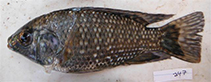 Oreochromis leucostictus
Male صورة بواسطة Turner, G.F.
صور | صور قوقل
Male صورة بواسطة Turner, G.F.
التصنيف / الأسماء الأسماء الشائعة | مرادفات | Catalog of Fishes(جنس, الانواع) | ITIS | CoL | WoRMS | Cloffa
> Cichliformes (Cichlids, convict blennies) > Cichlidae (Cichlids) > Pseudocrenilabrinae
Etymology: Oreochromis: Latin, aurum = gold + Greek, chromis = a fish, perhaps a perch (Ref. 45335); leucostictus: From the Greek "leukostiktos" = with white spots, referring to the white spotted color pattern of this species (Ref. 55074).
More on author: Trewavas.
Etymology: Oreochromis: Latin, aurum = gold + Greek, chromis = a fish, perhaps a perch (Ref. 45335); leucostictus: From the Greek "leukostiktos" = with white spots, referring to the white spotted color pattern of this species (Ref. 55074).
More on author: Trewavas.
Taxonomic Remarks
Species also referred to as Tilapia nigra x T. zillii (Ref. 5166).
البيئة: الوسط / المنطقة المناخية / نطاق العمق / نطاق التوزيع البيئة
; المياه العذبة قاعية التغذية و المعيشة; pH range: 7.0 - 9.0; dH range: 10 - ?; نطاق العمق 0 - 10 m (Ref. 34291). Tropical; 26°C - 28°C (Ref. 2060); 2°N - 2°S
التوزيع الأقاليم | مناطق الفاو | النظام البيئي | الظهور | نقطة علي الخريطة | مقدمة | Faunafri
Africa: Lakes Edward, George and Albert and affluent rivers and streams of these lakes and of the Semliki River (Ref. 5166). Also in tributaries of the Aswa River where it is not certain whether it occurs naturally or has been introduced (Ref. 5166, 34290). Introduced from Lake Albert to Lake Victoria and fish ponds in catchment (Ref. 1739, 4967); also introduced in Lake Kivu (Ref. 107916). Several countries report adverse ecological impact after introduction.
الطول عند النضج الأول / الحجم / وزن / العمر
وصف مختصر مفاتيح التعريف | الوصف الخارجي | قياسات المظهر الخارجي
الأشواك الظهرية (المجموع) : 15 - 18; الأشعة الظهرية الناعمة (المجموع) : 10 - 13; شوكة شرجية: 3 - 4; أشعه شرجية لينه: 9 - 11; فقرات: 27 - 29. Diagnosis: A small medium-sized tilapia, with a relatively deep, flattened body and small head and jaws (Ref. 118638). Lower jaw not longer than 34% of the head, preorbital depth not more than 23.2%; teeth of jaws and pharynx very small, those of the lower pharyngeal restricted to the posterior part of the pad; 27-29 vertebrae (Ref. 2). Scales on lateral line 28-30 (Ref. 2, 34290, 54836), rarely 31 or 32 (Ref. 2). Gill-rakers on lower part of first gill-arch 19-24 (Ref. 34290, 54836). Length/depth ratio of caudal peduncle 0.5-0.8 (Ref. 34290). Males are black with white spots on the flanks and fins; females are more olive coloured, with pale ventral regions, faint vertical barring and dark anal and tail fins (Ref. 2, 4903, 34290, 118638). Lower lip often bluish-white; 8 to 12 dark vertical stripes sometimes visible on flanks (Ref. 2, 4903, 34290). Dorsal, anal and caudal fins dark; soft dorsal, entire caudal and anal fins with well-defined bluish-white spots (Ref. 4903, 34290). Genital papilla intensely white in both sexes (Ref. 2). Ground color in breeding males changes to dark blue-black, whilst whitish spots on body and fins are intensified; eye outstanding with its bright amber iris crossed by a black bar (Ref. 2, 4903, 34290).
Body shape (shape guide): fusiform / normal; Cross section: compressed.
Body shape (shape guide): fusiform / normal; Cross section: compressed.
Occupies an inshore zone and is common in lagoons (Ref. 87). Occasionally forms schools (Ref. 2, 39939). Is mainly diurnal (Ref. 2). Can tolerate considerable deoxygenation (Ref. 2, 1739, 4903, 13046, 32297) and warm temperatures (Ref. 2060), known to occur at 38.0 °C (Ref. 2). Feeds on phytoplankton (Ref. 2, 21, 4903, 34291, 55486) and detritus (Ref. 34291, 55486, 56058). Ovophilic (Ref. 2060), a maternal mouthbrooder (Ref. 4903, 34291, 55074, 118638). Males dig simple pits in shallow water (Ref. 118638). Strongly prone to precocious maturity; this makes it an undesirable aquaculture species (Ref. 118638). Caught in large numbers by small-meshed nets in shallow swampy areas, where it has become established (Ref. 118638). When stocked along with Nile tilapia, probably will assist in filling all suitable niches and competitively excluding native species (Ref. 118638).
دورة الحياة وسلوك التزاوج النضج | التكاثر | وضع البيض | بيض | الخصوبة | اليرقات
Breeds over shallow muddy bottoms in sheltered inlets and in the papyrus fringe (Ref. 56123). Ripe males are found near the bottom over particular nesting areas (Ref. 39939). Males establish territory and make a nest by mouth-digging (Ref. 2), actively preventing invasion by other fishes (Ref. 39939). Nests made in shallow water, 15-300cm deep (Ref. 2, 56123), 16-20cm in diameter and 1-4m apart, dug in coarse leaf-debris or on shallow muddy bottoms (Ref. 2, 39939). Brooding females from the lagoons are found in pools adjacent to the lagoons/nursery swamps (Ref. 2, 39939). Fry spent their early days in shallow, grassy (Ref. 2, 32297, 39939) and deoxygenated swamps (Ref. 56123), but move to deeper water as their length increases (Ref. 32297, 39939).
المرجع الرئيسي
قم بتحميل مراجعك | مراجع | المنظم : Kullander, Sven O. | المتعاونين
Trewavas, E., 1983. Tilapiine fishes of the genera Sarotherodon, Oreochromis and Danakilia. British Mus. Nat. Hist., London, UK. 583 p. (Ref. 2)
حالة القائمة الحمراء للاتحاد الدولي لحفظ الطبيعة والموارد الطبيعية (Ref. 130435: Version 2025-2 (Global))
Least Concern (LC) ; Date assessed: 30 March 2021
CITES
Not Evaluated
خطر للأنسان
Potential pest (Ref. 13364)
استخدامات بشرية
الأستزراع المائي: التجريبي; حوض مائي: تجاري
FAO - Publication: search | FishSource |
مزيد من المعلومات
علم البيئة الغذائية
المواد الغذائية (الفرائس)
التركيبة الغذائية
استهلاك الأغذية
الحصص الغذائية
مفتريسات
المواد الغذائية (الفرائس)
التركيبة الغذائية
استهلاك الأغذية
الحصص الغذائية
مفتريسات
الديناميكيات السكانية
معاملات النمو
الحد الأقصى للأعمار/الأحجام
علاقة الطول بالوزن.
علاقة الطول بالطول.
الطول- الترددات
التحويل الجماعي
توظيف
الوفرة
معاملات النمو
الحد الأقصى للأعمار/الأحجام
علاقة الطول بالوزن.
علاقة الطول بالطول.
الطول- الترددات
التحويل الجماعي
توظيف
الوفرة
التشريح
منطقة الخياشيم
الدماغ
الأوتوليث
منطقة الخياشيم
الدماغ
الأوتوليث
علم وظائف الأعضاء
تكوين الجسم
المغذيات
استهلاك الأوكسجين
نوع السباحة
سرعة السباحة
الأصباغ البصرية
صوت السمك
الأمراض والطفيليات
السمية (LC50s)
تكوين الجسم
المغذيات
استهلاك الأوكسجين
نوع السباحة
سرعة السباحة
الأصباغ البصرية
صوت السمك
الأمراض والطفيليات
السمية (LC50s)
ذات الصلة بالبشر
أنظمة الاستزراع المائي
ملامح تربية الأحياء المائية
سلالات
حالات سيغواتيرا
طوابع بريدية وعملات معدنية ومتنوعة
أنظمة الاستزراع المائي
ملامح تربية الأحياء المائية
سلالات
حالات سيغواتيرا
طوابع بريدية وعملات معدنية ومتنوعة
أدوات
كتاب إلكتروني | دليل الميدان | معالج تردد الطول-التردد | أداة تاريخ الحياة | نقطة علي الخريطة |
Catch-MSY |
تقارير خاصة
البحث عن صيانت الأحواض المائيه | التحقق من وجود صفحات حقائق الأنواع | البحث عنا حقائق حول الأحواض المائيه
تنزيل XML
مصادر علي الأنترنت
AFORO (otoliths) | Alien/Invasive Species database | Aquatic Commons | BHL | Cloffa | Websites from users | البحث في مراقبي الأسماك | CISTI | Catalog of Fishes: جنس, الانواع | DiscoverLife | ECOTOX | FAO - Publication: search | Faunafri | Fishipedia | Fishtrace | GloBI | Google Books | Google Scholar | Google | IGFA World Record | OneZoom | Open Tree of Life | Otolith Atlas of Taiwan Fishes | PubMed | Reef Life Survey | Socotra Atlas | TreeBase | شجرة الحياة | Wikipedia: ذهب, بحث | World Records Freshwater Fishing | سجلات علم الحيوانات
تقديرات تستند إلى النماذج
مؤشر التنوع الشُعبي الوراثي (مرجع 82804): PD50 = 0.5000 [Uniqueness, from 0.5 = low to 2.0 = high].
Bayesian length-weight: a=0.01318 (0.00710 - 0.02446), b=2.99 (2.84 - 3.14), in cm total length, based on LWR estimates for this species & Genus-body shape (Ref. 93245).
مستوى غذائي (مرجع 69278): 2.3 ±0.14 se; based on food items.
Generation time: 1.8 ( na - na) years. Estimated as median ln(3)/K based on 1 growth studies.
المرونه (مرجع 120179): وسيط, الحد الزمني الأدني لتضاعف عدد أفراد المجتمع 1.4-4.4 سنة (K=0.63; assumed tmax>2).