



Scomberomorus niphonius (Cuvier, 1832)
Japanese Spanish mackerel
Thêm quan sát của bạn vào Fish Watcher
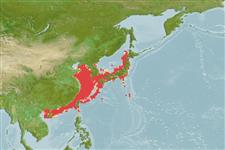
| Native range | All suitable habitat | Point map | Year 2050 |
|
| This map was computer-generated and has not yet been reviewed. |
| Scomberomorus niphonius AquaMaps Data sources: GBIF OBIS |
Tải lên của bạn hình ảnh Và Video
Các tranh (Ảnh) | Tem, tiền xu, v.v. | Google image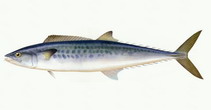 Scomberomorus niphonius
Hình ảnh của CAFS
Các tranh (Ảnh) | Tem, tiền xu, v.v. | Google image
Hình ảnh của CAFS
Phân loại / Tên Tên thường gặp | Các synonym ( Các tên trùng) | Catalog of Fishes(Giống, Các loài) | ITIS | CoL | WoRMS | Cloffa
> Scombriformes (Mackerels) > Scombridae (Mackerels, tunas, bonitos) > Scombrinae
Etymology: Scomberomorus: Latin, scomber = mackerel + Greek, moros = silly, stupid (Ref. 45335).
More on author: Cuvier.
Etymology: Scomberomorus: Latin, scomber = mackerel + Greek, moros = silly, stupid (Ref. 45335).
More on author: Cuvier.
Môi trường: môi trường / vùng khí hậu / Mức độ sâu / phạm vi phân phối Sinh thái học
biển pelagic-neritic; Ở đại duơng, biển (Ref. 51243); mức độ sâu 0 - 200 m (Ref. 54883). Temperate; 45°N - 18°N, 108°E - 143°E (Ref. 54883)
Sự phân bố Lãnh thổ | Các khu vực của FAO | Các hệ sinh thái | Những lần xuất hiện | Bản đồ điểm | Những chỉ dẫn | Faunafri
Northwest Pacific: confined to the subtropical and temperate waters of China, the Yellow Sea and Sea of Japan north to Vladivostok, former USSR. Often confused with Scomberomorus munroi.
Bộ gần gũi / Khối lượng (Trọng lượng) / Tuổi
Chín muồi sinh dục: Lm ? range ? - ? cm
Max length : 113 cm TL con đực/không giới tính; (Ref. 116934); Khối lượng cực đại được công bố: 8.0 kg (Ref. 116934)
Max length : 113 cm TL con đực/không giới tính; (Ref. 116934); Khối lượng cực đại được công bố: 8.0 kg (Ref. 116934)
Mô tả ngắn gọn Khóa để định loại | Hình thái học | Sinh trắc học
Các tia vây lưng cứng (tổng cộng) : 19 - 21; Các vây lưng mềm (tổng cộng) : 15 - 19; Tia mềm vây hậu môn: 16 - 20; Động vật có xương sống: 48 - 50. Interpelvic process small and bifid. Lateral line gradually curving down toward caudal peduncle. The only species in the genus with a straight intestine. Swim bladder absent. Body covered with small scales. Anterior quarter of first dorsal fin and a narrow distal margin of the rest of the dorsal fin black. Sides with seven or more rows of longitudinal spots on the sides; some spots connected together.
Body shape (shape guide): elongated; Cross section: oval.
Body shape (shape guide): elongated; Cross section: oval.
Found near shore (including semi-enclosed sea areas) (Ref. 11230). Undergoes a spawning migration in spring (March to June) and a feeding migration in fall (September to November) in the Inland Sea of Japan. Feeds on small fishes. Another major fishing gear that is used are set nets. This species is the most important Scomberomorus species in Japan which is cultured and released for fishery. Marketed fresh and especially tasty in winter. Eaten pan-fried, broiled and baked (Ref. 9988).
Vòng đời và hành vi giao phối Chín muồi sinh dục | Sự tái sinh sản | Đẻ trứng | Các trứng | Sự sinh sản | Ấu trùng
Tài liệu tham khảo chính
Tải lên tài liệu tham khảo của bạn | Các tài liệu tham khảo | Người điều phối : Collette, Bruce B. | Người cộng tác
Collette, B.B. and C.E. Nauen, 1983. FAO Species Catalogue. Vol. 2. Scombrids of the world. An annotated and illustrated catalogue of tunas, mackerels, bonitos and related species known to date. Rome: FAO. FAO Fish. Synop. 125(2):137 p. (Ref. 168)
Tình trạng Sách đỏ IUCN (Ref. 130435: Version 2025-2 (Global))
Near Threatened (NT) (A2bd); Date assessed: 19 October 2022
CITES
Not Evaluated
Mối đe dọa đối với con người
Harmless
Sử dụng của con người
Các nghề cá: tính thương mại cao; Nuôi trồng thủy sản: tính thương mại; cá để chơi: đúng
FAO - Các nghề cá: hạ cánh, hồ sơ loài; Publication: search | FishSource | Biển chung quanh ta
Thêm thông tin
Sinh thái dinh dưỡng
Thức ăn (con mồi)
Thành phần thức ăn
Thành phần thức ăn
Khẩu phần ăn
Các động vật ăn mồi
Thức ăn (con mồi)
Thành phần thức ăn
Thành phần thức ăn
Khẩu phần ăn
Các động vật ăn mồi
Biến động dân số
Các thông số tăng trưởng
Độ tuổi / kích thước tối đa
Chiều dài-trọng lượng tương đối
Chiều dài-chiều dài tương đối.
Chiều dài-tần số
Chuyển đổi khối lượng
Bổ xung
Sự phong phú
Các thông số tăng trưởng
Độ tuổi / kích thước tối đa
Chiều dài-trọng lượng tương đối
Chiều dài-chiều dài tương đối.
Chiều dài-tần số
Chuyển đổi khối lượng
Bổ xung
Sự phong phú
Vòng đời
Sự tái sinh sản
Chín muồi sinh dục
Độ trưởng thành/Mang liên quan
Sự sinh sản
Đẻ trứng
Tập hợp sinh sản
Các trứng
Sự phát triển của trứng
Ấu trùng
Sự biến động ấu trùng
Sự tái sinh sản
Chín muồi sinh dục
Độ trưởng thành/Mang liên quan
Sự sinh sản
Đẻ trứng
Tập hợp sinh sản
Các trứng
Sự phát triển của trứng
Ấu trùng
Sự biến động ấu trùng
Sự phân bố
Lãnh thổ
Các khu vực của FAO
Các hệ sinh thái
Những lần xuất hiện
Những chỉ dẫn
BRUVS - Video
Lãnh thổ
Các khu vực của FAO
Các hệ sinh thái
Những lần xuất hiện
Những chỉ dẫn
BRUVS - Video
Giải phẫu
Vùng mang
Não
sỏi tai
Vùng mang
Não
sỏi tai
Sinh lý học
Thành phần cơ thể
Chất dinh dưỡng
Thành phần ô-xy
Kiểu bơi
Tốc độ bơi
Sắc tố thị giác
Tiếng cá
Bệnh tật & Ký sinh trùng
Độc tính (LC50)
Thành phần cơ thể
Chất dinh dưỡng
Thành phần ô-xy
Kiểu bơi
Tốc độ bơi
Sắc tố thị giác
Tiếng cá
Bệnh tật & Ký sinh trùng
Độc tính (LC50)
Liên quan đến con người
Hệ thống nuôi trồng thủy sản
Các tổng quan nuôi trồng thủy sản
Các giống
Các trường hợp ngộ độc Ciguatera
Tem, tiền xu, v.v.
Hệ thống nuôi trồng thủy sản
Các tổng quan nuôi trồng thủy sản
Các giống
Các trường hợp ngộ độc Ciguatera
Tem, tiền xu, v.v.
Các công cụ
Sách điện tử | Hướng dẫn hiện trường | Tần suất chiều dài Wizard | Công cụ của vòng đời | Bản đồ điểm |
Bắt-MSY |
Báo cáo đặc biệt
Kiểm tra bảo trì bể cá | Kiểm tra các tờ thông tin về loài | Kiểm tra các tờ thông tin về nuôi trồng thủy sản
Tải xuống XML
Các nguồn internet
AFORO (otoliths) | Aquatic Commons | BHL | Cloffa | Websites from users | Check FishWatcher | CISTI | Catalog of Fishes: Giống, Các loài | DiscoverLife | ECOTOX | FAO - Các nghề cá: hạ cánh, hồ sơ loài; Publication: search | Faunafri | Fishipedia | Fishtrace | GloBI | Google Books | Google Scholar | Google | IGFA World Record | Các cơ sở dữ liệu quốc gia | OneZoom | Open Tree of Life | Otolith Atlas of Taiwan Fishes | PubMed | Reef Life Survey | Socotra Atlas | TreeBase | Cây Đời sống | Wikipedia: Go, tìm | World Records Freshwater Fishing | Tạp chí Zoological Record
Ước tính dựa trên mô hình
Nhiệt độ ưa thích (Tài liệu tham khảo 123201): 13 - 24.5, mean 19.2 °C (based on 181 cells).
Chỉ số đa dạng phát sinh loài (Tài liệu tham khảo 82804): PD50 = 0.5000 [Uniqueness, from 0.5 = low to 2.0 = high].
Bayesian length-weight: a=0.00347 (0.00203 - 0.00593), b=3.14 (2.98 - 3.30), in cm total length, based on LWR estimates for this species & (Sub)family-body (Ref. 93245).
Mức dinh dưỡng (Tài liệu tham khảo 69278): 4.5 ±0.8 se; based on diet studies.
Generation time: 2.1 ( na - na) years. Estimated as median ln(3)/K based on 2 growth studies.
Thích nghi nhanh (Tài liệu tham khảo 120179): Trung bình, thời gian nhân đôi của chủng quần tối thiểu là 1.4 - 4.4 năm (K=0.7; assumed tm>1).
Prior r = 0.57, 95% CL = 0.37 - 0.85, Based on 1 data-limited stock assessment.
Chất dinh dưỡng (Ref. 124155): Calcium = 13.3 [4.9, 52.9] mg/100g; Iron = 0.325 [0.125, 0.917] mg/100g; Protein = 20.6 [19.1, 22.0] %; Omega3 = 0.47 [0.25, 0.94] g/100g; Selenium = 21.4 [6.2, 103.2] μg/100g; VitaminA = 8.35 [1.43, 54.86] μg/100g; Zinc = 0.31 [0.19, 0.53] mg/100g (wet weight); based on nutrient studies.