



Kathetostoma giganteum Haast, 1873
Giant stargazer
เพิ่มการสังเกตของคุณใน Fish Watcher
| Native range | All suitable habitat | Point map | Year 2050 |

|
| This map was computer-generated and has not yet been reviewed. |
| Kathetostoma giganteum AquaMaps Data sources: GBIF OBIS |
อัพโหลดของคุณ ภาพถ่าย และ วิดีโอ
รูปภาพหลายรูป | Google image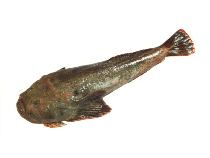 Kathetostoma giganteum
ภาพโดย SeaFIC
รูปภาพหลายรูป | Google image
ภาพโดย SeaFIC
การจำแนกประเภท / ชื่อ ชื่อสามัญ | ชื่อพ้อง | Catalog of Fishes(สกุล, ชนิด) | ITIS | CoL | WoRMS | Cloffa
> Perciformes/Uranoscopoidei (Sand dwellers) > Uranoscopidae (Stargazers)
Etymology: Kathetostoma: Greek, kathetos, -on = lime + Greek, stoma = mouth (Ref. 45335).
Etymology: Kathetostoma: Greek, kathetos, -on = lime + Greek, stoma = mouth (Ref. 45335).
สิ่งแวดล้อม : สิ่งแวดล้อม / เขตภูมิอากาศ / ระดับความลึก / ระยะการกระจายสินค้า นิเวศวิทยา
เกี่ยวกับทะเล,น้ำเค็ม สัตว์น้ำหน้าดิน; ระดับความลึก 30 - 600 m (Ref. 58489). Temperate; 34°S - 52°S, 158°E - 174°W
การแพร่กระจาย อาณาเขต | พื้นที่จำแนกตาม FAO | ระบบนิเวศหลายระบบ | การปรากฏขึ้น,การเกิดขึ้น,พบ | ตำแหน่งบนแผนที่ | การแนะนำ | Faunafri
Southwest Pacific: endemic to New Zealand.
ความยาวเมื่อครบกำหนดครั้งแรก / ขนาด / น้ำหนัก / อายุ
วัยเจริญพันธุ์: Lm 47.5, range 45 - 50 cm
Max length : 90.0 cm TL เพศผู้/กระเทย; (Ref. 9988); common length : 46.0 cm TL เพศผู้/กระเทย; (Ref. 9049); อายุสูงสุดที่ได้รายงาน: 20 ปี (Ref. 9072)
Max length : 90.0 cm TL เพศผู้/กระเทย; (Ref. 9988); common length : 46.0 cm TL เพศผู้/กระเทย; (Ref. 9049); อายุสูงสุดที่ได้รายงาน: 20 ปี (Ref. 9072)
คำอธิบายสั้นๆ เครื่องมือที่ใช้ในการแยกชนิดสัตว์,สิ่งมีชีวิตออกจากกัน | สัณฐานวิทยา | ความยาวต่างๆ
ก้านครีบอ่อนที่หาง (รวม) : 17 - 19; ก้านครีบอ่อนที่ก้น: 17 - 18; สัตว์มีกระดูกสันหลัง: 33 - 34. This species is distinguished by the following characters: D 17-19; A 17-18; vertebrae 33-34; body rather elongate, tapering from a moderately broad, flat, bony head (width 1.1-1.4 times its length) covered with tiny blunt spines in juveniles to low radiating ridges in adults; small eyes directed upwards; bony orbital rim separated medially by naked rectangular space; mouth large, vertical, with several prominent canines between smaller canines; chin smooth; lips with short ridge-like crenulations; ventral margin of preopercle with four spine-like processes; anterior end of isthmus with a pair of prominent forward directed spines; prominent cleithral spine sheathed with skin above pectoral fin base; gill rakers on first arch 14-17, in the form of patches of fine teeth, patches narrow, teeth in three or four rows, innermost row rather long; no scales; lateral line pores in skin high on side close to base of dorsal fin; dorsal fin low, elongate, its base 67-82% of predorsal length; pectoral fins huge, fan-like; pelvic fins moderately large, length 20-25% SL (Ref. 86516).
Body shape (shape guide): fusiform / normal.
Body shape (shape guide): fusiform / normal.
Reported from depths between 30 m (Ref. 58489) and 600 m (Ref. 9258). Buries in sea bed until suitable prey passes by. Utilized fresh and frozen; can be steamed, broiled and baked (Ref. 9988).
วงจรชีวิตและพฤติกรรมการผสมพันธุ์ วัยเจริญพันธุ์ | การสืบพันธุ์ | การวางไข่ | เซลสืบพันธ์ของเพศเมีย(ไข่) | ความดกของไข่ | ตัวอ่อน
อ้างอิงหลัก
อัพโหลดข้อมูลอ้างอิงของคุณ | อ้างอิง | ผู้ประสานงาน | ผู้ร่วมมือ
Armitage, R.O., D.A. Payne, G.J. Lockley, H.M. Currie, R.L. Colban, B.G. Lamb and L.J. Paul (eds.), 1994. Guide book to New Zealand commercial fish species. Revised edition. New Zealand Fishing Industry Board, Wellington, New Zealand, 216 p. (Ref. 9258)
CITES
Not Evaluated
ภัยคุกคามต่อมนุษย์
Harmless
การใช้ของมนุษย์
การประมง: การค้า
FAO - การประมง: การลงจอด; Publication: search | FishSource | ทะเลรอบๆเรา
ข้อมูลเพิ่มเติม
พลวัตของประชากร
พารามิเตอร์การเจริญเติบโต
อายุสูงสุด / ขนาด
ความยาว-น้ำหนักสัมพันธ์
ความยาว-ความยาวสัมพันธ์
ความยาว-ความถี่
การแปลงมวล
การทดแทนที่
อุดมสมบรูณ์
พารามิเตอร์การเจริญเติบโต
อายุสูงสุด / ขนาด
ความยาว-น้ำหนักสัมพันธ์
ความยาว-ความยาวสัมพันธ์
ความยาว-ความถี่
การแปลงมวล
การทดแทนที่
อุดมสมบรูณ์
วงจรชีวิต
การสืบพันธุ์
วัยเจริญพันธุ์
ความสมบูรณ์พันธุ์/เหงือกที่เกี่ยวข้อง
ความดกของไข่
การวางไข่
การรวมตัวของสปอน
เซลสืบพันธ์ของเพศเมีย(ไข่)
การพัฒนาไข่
ตัวอ่อน
พลวัตของสัตว์น้ำวัยอ่อน
การสืบพันธุ์
วัยเจริญพันธุ์
ความสมบูรณ์พันธุ์/เหงือกที่เกี่ยวข้อง
ความดกของไข่
การวางไข่
การรวมตัวของสปอน
เซลสืบพันธ์ของเพศเมีย(ไข่)
การพัฒนาไข่
ตัวอ่อน
พลวัตของสัตว์น้ำวัยอ่อน
การแพร่กระจาย
อาณาเขต
พื้นที่จำแนกตาม FAO
ระบบนิเวศหลายระบบ
การปรากฏขึ้น,การเกิดขึ้น,พบ
การแนะนำ
BRUVS - วิดีโอ
อาณาเขต
พื้นที่จำแนกตาม FAO
ระบบนิเวศหลายระบบ
การปรากฏขึ้น,การเกิดขึ้น,พบ
การแนะนำ
BRUVS - วิดีโอ
กายวิภาคศาสตร์
พื้นที่เหงือก
สมอง
หินโสต
พื้นที่เหงือก
สมอง
หินโสต
สรีรวิทยา
องค์ประกอบของร่างกาย
สารอาหาร
การใช้ออกซิเจน
ประเภทการว่ายน้ำ
ระดับความเร็วในการว่ายน้ำ
เม็ดสีที่มองเห็นได้
เสียงปลา
โรคและปรสิต
ความเป็นพิษ (LC50s)
องค์ประกอบของร่างกาย
สารอาหาร
การใช้ออกซิเจน
ประเภทการว่ายน้ำ
ระดับความเร็วในการว่ายน้ำ
เม็ดสีที่มองเห็นได้
เสียงปลา
โรคและปรสิต
ความเป็นพิษ (LC50s)
พันธุศาสตร์
จีโนม
พันธุศาสตร์
ความไม่สมดุลทางเชื้อชาติ
อัตราพันธุกรรม
ความหลากหลายทางพันธุกรรม
จีโนม
พันธุศาสตร์
ความไม่สมดุลทางเชื้อชาติ
อัตราพันธุกรรม
ความหลากหลายทางพันธุกรรม
เกี่ยวข้องกับมนุษย์
ระบบการเพาะเลี้ยงสัตว์น้ำ
ประวัติการเพาะเลี้ยงสัตว์น้ำ
สายพันธุ์
กรณีซิเกวเทอรา
แสตมป์ เหรียญ อื่นๆ
ระบบการเพาะเลี้ยงสัตว์น้ำ
ประวัติการเพาะเลี้ยงสัตว์น้ำ
สายพันธุ์
กรณีซิเกวเทอรา
แสตมป์ เหรียญ อื่นๆ
เครื่องมือ
หนังสืออิเล็กทรอนิกส์ | คู่มือภาคสนาม | ผู้มีความชำนาญในเรื่องความถี่ของความยาว | เครื่องมือในการศึกษาชีวประวัติ | ตำแหน่งบนแผนที่ |
จับ-MSY |
รายงานพิเศษ
ตรวจสอบการบำรุงรักษาตู้ปลา | ตรวจสอบเอกสารข้อเท็จจริงเกี่ยวกับสายพันธุ์ | ตรวจสอบเอกสารข้อเท็จจริงเกี่ยวกับการเพาะเลี้ยงสัตว์น้ำ
ดาวน์โหลด XML
หน้าสรุป | ข้อมูลสำคัญ | ชื่อสามัญ | ภาพถ่าย
แหล่งที่มาจากอินเตอร์เน็ต
AFORO (otoliths) | Aquatic Commons | BHL | Cloffa | Websites from users | Check FishWatcher | CISTI | Catalog of Fishes: สกุล, ชนิด | DiscoverLife | ECOTOX | FAO - การประมง: การลงจอด; Publication: search | Faunafri | Fishipedia | Fishtrace | GloBI | Google Books | Google Scholar | Google | IGFA World Record | OneZoom | Open Tree of Life | Otolith Atlas of Taiwan Fishes | PubMed | Reef Life Survey | Socotra Atlas | TreeBase | แผนภูมิชีวิตแบบต้นไม้ | Wikipedia: Go, ค้นหา | World Records Freshwater Fishing | Zoobank | บันทึกทางด้านสัตววิทยา
การประมาณค่าตามแบบจำลอง
อุณหภูมิที่ต้องการ (อ้างอิง 123201): 7.8 - 14.3, mean 11.2 °C (based on 62 cells).
ดัชนีความหลากหลายทางวิวัฒนาการ (อ้างอิง 82804): PD50 = 0.5020 [Uniqueness, from 0.5 = low to 2.0 = high].
Bayesian length-weight: a=0.01230 (0.00648 - 0.02335), b=3.02 (2.85 - 3.19), in cm total length, based on LWR estimates for this species & (Sub)family-body (Ref. 93245).
ระดับชั้นอาหาร (อ้างอิง 69278): 4.2 ±0.58 se; based on food items.
ความสามารถในการกลับคืนสู่ปกติ (อ้างอิง 120179): ต่ำ, เวลาต่ำสุดที่จะทำให้ประชากรเพิ่มขึ้นเป็น 2 เท่าใช้เวลา 4.5 - 14 ปี (tm=3; tmax=20; K=0.1-0.2;).
Prior r = 0.34, 95% CL = 0.22 - 0.51, Based on 1 full stock assessment.
สารอาหาร (Ref. 124155): Calcium = 20.6 [14.1, 37.8] mg/100g; Iron = 0.324 [0.212, 0.523] mg/100g; Protein = 18.7 [17.9, 19.5] %; Omega3 = 0.679 [0.432, 1.032] g/100g; Selenium = 20.5 [11.4, 37.8] μg/100g; VitaminA = 16.4 [5.6, 49.6] μg/100g; Zinc = 0.368 [0.278, 0.500] mg/100g (wet weight);