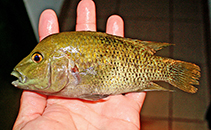
Common names from other countries
Classification / Names
ຊື່ສາມັນ | ຄຳສັບຄ້າຍຄືກັນ | Catalog of Fishes(ຕະກຸນ, ຊະນິດ) | ITIS | CoL | WoRMS | Cloffa
>
Cichliformes (Cichlids, convict blennies) >
Cichlidae (Cichlids) > Cichlinae
Etymology: Herichthys: Greek, eri = very, a lot + Greek, ichthys = fish (Ref. 45335); pratinus: From the Latin word for green, in allusion to its greenish color.
Issue
Junior synonym of Herichthys pantostictus according to Pérez-Miranda et al., 2020 (Ref. 126993:11); this record will be deleted.
Environment: milieu / climate zone / ລະດັບຄວາມເລິກ / distribution range
ນິເວດວິທະຍາ
; ນ້ຳຈືດ ກ່ຽວກັບ (ຢູ່)ເທິງຊັ້ນພື້ນດິນໃນທະເລເປີດ. Tropical
Central America: endemic to the Rio el Salto in Mexico.
ຂະໜາດ / ນ້ຳໜັກ / Age
ການຈະເລີນເຕັມໄວ: Lm ? range ? - ? cm
Max length : 12.1 cm SL ຕົວຜູ້/ບໍ່ມີເພດ; (Ref. 94458)
Short description
ຕົວທີ່ໃຊ້ໃນການຈຳແນກຊະນິດ | ສະລີລະວິທະຍາ | ການວັດແທກຮູບຮ່າງລັກສະນະພາຍນອກຂອງດິນ,ສັດ,ປາ…
ຄີ (ໜາມ)ແຂງຢູ່ຫຼັງປາ (ທັງໝົດ) : 15 - 16; ຄີຫຼັງຂອງປາ (ຄີອ່ອນ) (ທັງໝົດ) : 10 - 11; ຄີ(ໜາມ) ແຂງຢູ່ຄີກົ້ນປາ
ກຸ່ມປາກະດູກແຂງ
ຄວາມຖີ່ຂອງກຸ່ມຖ່າຍທອດພັນ
ປາທີ່ມີການເຄື່ອນຍ້າຍຈາກທະເລໄປຫານ້ຳຈືດ ແລະນ້ຳຈືດຫາທະເລ
ປາທີ່ມີການເຄື່ອນຍ້າຍຈາກທະເລແລະໄປໄຂ່ຢູ່ນ້ຳຈືດ
ຄີກົ້ນຂອງປາ
ສັດທີ່ມີກະດູກສັນຫັຼງ
ການຖ່າຍທອດທາງກຳມະພັນຈາກພໍ່ແມ່ຫາລູກ: 5; ຄີກົ້ນຂອງປາ: 8 - 9. This species is diagnosed by having predorsal contour steep and flat, concave before eye, and prominent forehead, forming a nuchal hump in adult males. Dorsal and ventral contours are conic, straight to moderately convex, making intersection with caudal peduncle conspicuous. This is also distinguished using the following combination characters: distance from anal fin origin to hypural base (mean 36%, SD 1%); mouth slightly angled
downward; lower pharyngeal plate moderately stout and broad; 2 rows of 8-9 stout molars increasing in size posteriorly and molarization flank the midline, 4 most posterior molars flattened; and spiny dorsal fin rays V (Ref. 94458).
Body shape (shape guide): fusiform / normal.
This species is syntopic in the lower courses of the Rio el Salto with H. cf. carpintis, Astyanax mexicanus, Xiphohorus nezahualcoyotl, and Poecilia mexicana along with other species of fishes in higher reaches (Ref. 94458).
Life cycle and mating behavior
ການຈະເລີນເຕັມໄວ | ການສືບພັນ | ການວາງໄຂ່ | ໄຂ່ | ຄວາມດົກຂອງໄຂ່ປາ | ຕົວອ່ອນ
de la Maza-Benignos, M. and Ma. De L. Lozano-Villano, 2013. Description of three new species of the genus Herichthys (Perciformes: Cichlidae) from eastern Mexico, with redescription of H. labridens, H. steindachneri, and H. pantostictus. Zootaxa 3734(2):101-129. (Ref. 94458)
IUCN Red List Status (Ref. 130435: Version 2025-1)
Threat to humans
Harmless
Human uses
ເຄື່ອງມື
Special reports
Download XML
ແຫຼ່ງອີນເຕີເນັດ
Estimates based on models
Phylogenetic diversity index (ເອກະສານອ້າງອີງ
82804): PD
50 = 0.5001 [Uniqueness, from 0.5 = low to 2.0 = high].
Bayesian length-weight: a=0.02291 (0.01064 - 0.04934), b=3.07 (2.89 - 3.25), in cm total length, based on LWR estimates for this (Sub)family-body shape (Ref.
93245).
ຊັ້ນເຂດຮ້ອນ (ເອກະສານອ້າງອີງ
69278): 3.3 ±0.1 se; based on size and trophs of closest relatives
ຄວາມຢືດຢຸ່ນ (ເອກະສານອ້າງອີງ
120179): ສູງ, ປະຊາກອນຕຳ່ສຸດທີ່ໃຊ້ເວລາສອງໜ້ອຍກວ່າ 15 ເດືອນ (Preliminary K or Fecundity.).
Fishing Vulnerability (Ref.
59153): Low vulnerability (10 of 100).
🛈