Elasmobranchii (sharks and rays) >
Myliobatiformes (Stingrays) >
Dasyatidae (Stingrays) > Urogymninae
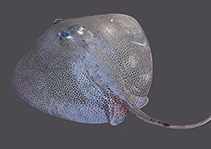
Etymology: Himantura: Greek, iman, imantos = thong, strap + Greek, oura = tail (Ref. 45335); tutul: Malay word tutul which means 'spotted', referring to leopard-like markings on the dorsal surface of large specimens (>1 m DW).
Environment: milieu / climate zone / depth range / distribution range
Ecology
Marine; demersal. Tropical
Indo-West Pacific: from the coast of Tanzania, to Laccadive Sea and Indo-Malay Archipelago, including Sunda Strait area, southern coast of Java Island, the Bali Sea, eastern South China Sea and Sulu Sea (Sabah).
Size / Weight / Age
Maturity: Lm ? range ? - ? cm
Max length : 115.0 cm WD (female)
Life cycle and mating behavior
Maturity | Reproduction | Spawning | Eggs | Fecundity | Larvae
Borsa, P., J.-D. Durand, K.N. Shen, I.S. Arlyza, D.D. Solihin and P. Berrebi, 2013. Himantura tutul sp. nov. (Myliobatoidei: Dasyatidae), a new ocellated whipray from the tropical Indo-West Pacific, described from its cytochrome-oxidase I gene sequence. Comptes Rendus Biologies 336:82-92. (Ref. 93847)
IUCN Red List Status (Ref. 130435: Version 2025-2)
Human uses
Fisheries: minor commercial
Tools
Special reports
Download XML
Internet sources