Classification / Names
आम नाम | उपशब्द | Catalog of Fishes(वर्ग, प्रजाति) | ITIS | CoL | WoRMS | Cloffa
>
Gobiiformes (Gobies) >
Gobiidae (Gobies) > Gobionellinae
Etymology: Rhinogobius: Greek, rhinos = nose + Latin, gobius = gudgeon (Ref. 45335); ogasawaraensis: The specific name, ogasawaraensis, refers to the type locality "Ogasawara Group", Japan (Ref. 88999).
Environment: milieu / climate zone / गहराई सीमा / distribution range
पारिस्थितिकी
; स्वच्छ जल, अलवण जल ड़िमरसल. Tropical
Asia: Japan. Known only and possibly merely endemic from Anijima Island, Chichijima Island, Hahajima Island and Otoutojima Island, the Bonin Islands (Ogasawara group), Japan (Ref. 88999).
आकार / वज़न / Age
परिपक्व अवधि: Lm ? range ? - ? cm
Max length : 6.5 cm SL पुल्लिंग / अलिंग; (Ref. 88999)
Short description
पहचान कुंजी | आकृति विज्ञान | मौरफोमैटरिक्स
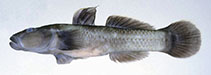
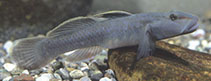
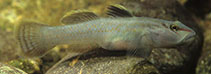
Rhinogobius ogasawaraensis is distinguished from all congeneric species by the following unique combination of features: second dorsal fin rays I, 8-9, pectoral fin rays 18-20, predorsal scales 7-16, vertebral count 26, cheek with some red spots, nape with several longitudinal dark stripes, upper part of pectoral fin base with a dark blotch, intermittent dark dotted rows along middle axis of body, no saddle shaped patch of dark dots on dorsal side of body, ventral side of body yellowish white, caudal fin with some dark dotted rows on middle region and the base with a pair of dark brown bars which vertically to each other (Ref. 88999).
Body shape (shape guide): elongated.
Life cycle and mating behavior
परिपक्व अवधि | पुनरुत्पत्ति | मछलीऔ का अंडे देना | अंडे | Fecundity | लार्वा
Suzuki, T., I-S. Chen and H. Senou, 2012. A new species of Rhinogobius Gill, 1859 (Teleostei: Gobiidae) from the Bonin Islands, Japan. Journal of Marine Science and Technology 19(6):693-701. (Ref. 88999)
IUCN Red List Status (Ref. 130435: Version 2025-1)
Vulnerable (VU) (B1ab(i,ii,iii)+2ab(i,ii,iii)); Date assessed: 02 March 2018
Threat to humans
Harmless
Human uses
मात्स्यिकी: कोई रुचि बग़ैर
साधन
Special reports
Download XML
इंटरनेट स्रोत
Estimates based on models
Phylogenetic diversity index (संदर्भ
82804): PD
50 = 0.5000 [Uniqueness, from 0.5 = low to 2.0 = high].
Bayesian length-weight: a=0.00977 (0.00444 - 0.02153), b=3.04 (2.85 - 3.23), in cm total length, based on LWR estimates for this (Sub)family-body shape (Ref.
93245).
Trophic level (संदर्भ
69278): 3.3 ±0.4 se; based on size and trophs of closest relatives
Fishing Vulnerability (Ref.
59153): Low vulnerability (10 of 100).
🛈