Teleostei (teleosts) >
Ophidiiformes (Cusk eels) >
Ophidiidae (Cusk-eels) > Neobythitinae
Etymology: Luciobrotula: Latin, lucius = pike + Latin, brotula, -ae = little, bud, shoot (Ref. 45335).
Environment: milieu / climate zone / depth range / distribution range
Ecology
Marine; benthopelagic. Tropical
Eastern Central Pacific: Hawaii.
Size / Weight / Age
Maturity: Lm ? range ? - ? cm
Max length : 26.7 cm SL (female)
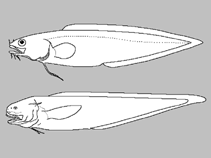
Dorsal soft rays (total): 92; Anal soft rays: 76; Vertebrae: 56. This species is characterized by the following set of characters: short, distinct lateral line ends below second dorsal fin ray; dorsal fin rays 92, anal fin rays 76, precaudal vertebrae 15, and total vertebrae 56; 16-17 total number of gill rakers on anterior arch; longest gill raker 0.7% SL; snout to end of lateral line 33.0% SL; a pore between eyes and no occipital pores (Ref. 83453).
Body shape (shape guide): elongated.
Benthic (Ref. 58302). Rare species (Ref. 34024). Reproductive strategy possibly similar to other members of this family featuring oviparity, with oval pelagic eggs floating in a gelatinous mass (Ref. 205).
Life cycle and mating behavior
Maturity | Reproduction | Spawning | Eggs | Fecundity | Larvae
Nielsen, J.G., 2009. A revision of the bathyal genus Luciobrotula (Teleostei, Ophidiidae) with two new species. Galathea Report 22:141-156. (Ref. 83453)
IUCN Red List Status (Ref. 130435: Version 2025-2)
Threat to humans
Harmless
Human uses
Fisheries: of no interest
Tools
Special reports
Download XML
Internet sources