Teleostei (teleosts) >
Ophidiiformes (Cusk eels) >
Ophidiidae (Cusk-eels) > Ophidiinae
Etymology: Ophidion: Diminutive of Greek, ophis = serpent (Ref. 45335); imitator: From the latin 'imitor' meaning to mimic or resemble, in reference to its striking resemblance to Lepophidium pardale and, to a lesser degree, Otophidium indefatigabile (Ref. 26886).
Environment: milieu / climate zone / depth range / distribution range
Ecology
Marine; demersal; depth range 18 - 112 m (Ref. 26886). Tropical
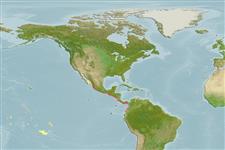
Eastern Central Pacific: off the tip of Baja California and Sinaloa, Mexico to the Gulf of Panama.
Size / Weight / Age
Maturity: Lm ? range ? - ? cm
Max length : 19.1 cm SL male/unsexed; (Ref. 26886)
Short description
Identification keys | Morphology | Morphometrics
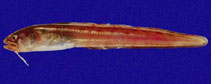
Dorsal spines (total): 0; Dorsal soft rays (total): 135 - 163; Anal spines: 0; Anal soft rays: 112 - 139; Vertebrae: 70 - 76. Dark brown to black blotching and spotting on head, dorsal, and lateral portion of the body. Scales with anguilliform arrangement on body; ethmoid spine blunt. Pelvic filaments long. Gill rakers numerous. Prejuvenile stage present.
Body shape (shape guide): elongated; Cross section: oval.
Uncommon species (Ref. 34024). Reproductive strategy possibly similar to other members of this family featuring oviparity, with oval pelagic eggs floating in a gelatinous mass (Ref. 205).
Life cycle and mating behavior
Maturity | Reproduction | Spawning | Eggs | Fecundity | Larvae
Nielsen, J.G., D.M. Cohen, D.F. Markle and C.R. Robins, 1999. Ophidiiform fishes of the world (Order Ophidiiformes). An annotated and illustrated catalogue of pearlfishes, cusk-eels, brotulas and other ophidiiform fishes known to date. FAO Fish. Synop. 125(18):178p. Rome: FAO. (Ref. 34024)
IUCN Red List Status (Ref. 130435: Version 2025-2)
Threat to humans
Harmless
Human uses
Fisheries: of no interest
Tools
Special reports
Download XML
Internet sources