Teleostei (teleosts) >
Ophidiiformes (Cusk eels) >
Carapidae (Pearlfishes) > Carapinae
Etymology: Encheliophis: Greek, enchelys, = eel + Greek, ophis = serpent (Ref. 45335).
More on author: Tanaka.
Environment: milieu / climate zone / depth range / distribution range
Ecology
Marine; bathydemersal. Deep-water
Northwest Pacific: Japan and Taiwan (Ref. 12711).
Size / Weight / Age
Maturity: Lm ? range ? - ? cm
Max length : 20.0 cm TL male/unsexed; (Ref. 34024)
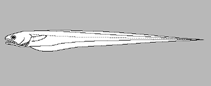
Eel-like, moderate to shallow body depth; maxilla adnate or nearly so; cardiform teeth present; branchiostegal membranes partly or completely united; swim bladder with thin terminal membrane or bulb; lacking enlarged dentary or premaxillary fangs, dentary diastema, pelvic fins, and swim bladder rocker bone (Ref. 34024). Dentary and palatine with conical teeth; 11-14 vertebrae in front of dorsal fin origin (Ref. 34024).
Body shape (shape guide): eel-like.
A rare (Ref. 34024) deep-water species (Ref. 559). Holothurian commensal (Ref. 34024).
Life cycle and mating behavior
Maturity | Reproduction | Spawning | Eggs | Fecundity | Larvae
Nielsen, J.G., D.M. Cohen, D.F. Markle and C.R. Robins, 1999. Ophidiiform fishes of the world (Order Ophidiiformes). An annotated and illustrated catalogue of pearlfishes, cusk-eels, brotulas and other ophidiiform fishes known to date. FAO Fish. Synop. 125(18):178p. Rome: FAO. (Ref. 34024)
IUCN Red List Status (Ref. 130435: Version 2025-2)
Threat to humans
Harmless
Human uses
Fisheries: of no interest
Tools
Special reports
Download XML
Internet sources