Teleostei (teleosts) >
Eupercaria/misc (Various families in series Eupercaria) >
Labridae (Wrasses) > Hypsigenyinae
Etymology: Haletta: Perhaps from Old Norge, haletta, haele = hero.
More on author: Valenciennes.
Environment: milieu / climate zone / depth range / distribution range
Ecology
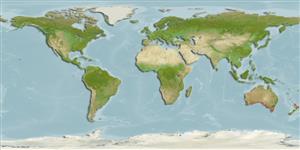
Marine; brackish; demersal; depth range 1 - 7 m (Ref. 75154). Subtropical; 28°S - 45°S
Eastern Indian Ocean and Southwest Pacific: southern coast of Australia, from Houtman Abrolhos, Western Australia to Sydney, New South Wales; including Tasmania.
Size / Weight / Age
Maturity: Lm ? range ? - ? cm
Max length : 29.0 cm SL male/unsexed; (Ref. 137577)
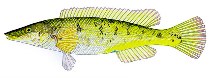
Forms large schools in estuaries and other sheltered waters with sand and seagrass bottoms. Considered primarily as an opportunistic carnivore, feeding mainly on polychaetes; also gastropods, crustaceans (crab and amphipods), algae and seagrass (mostly Zostera) are common; forams, bivalves, and ophiuroids were also found in a few stomachs.
Life cycle and mating behavior
Maturity | Reproduction | Spawning | Eggs | Fecundity | Larvae
Gomon, M.F. and J.R. Paxton, 1985. A revision of the Odacidae, a temperate Australian-New Zealand labroid fish family. Indo-Pac. Fish. (8):57 p. (Ref. 6185)
IUCN Red List Status (Ref. 130435: Version 2025-2)
Threat to humans
Harmless
Human uses
Fisheries: minor commercial
Tools
Special reports
Download XML
Internet sources