>
Perciformes/Cottoidei (Sculpins) >
Cottidae (Sculpins)
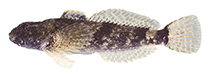
Etymology: Cottus: Greek, kottos = a fish (Ref. 45335); bairdii: Named after Spencer Fullerton Baird, first U.S. Fish Commissioner.
Eponymy: Spencer Fullerton Baird (1823–1887) was an American zoologist and giant of American ornithology. [...] (Ref. 128868), visit book page.
More on author: Girard.
Environment: milieu / climate zone / пределы глубины / distribution range
экология
; пресноводный демерсальный; пределы глубины ? - 16 m (Ref. 1998). Temperate; 59°N - 34°N
North America: widespread with highly disjunct distribution in Canada and USA. The former Blue Ridge race of the Atlantic slope of the Appalachian Mountains is now recognized as a distinct species Cottus caeruleomentum.
Size / Вес / Возраст
половая зрелость: Lm ? range ? - ? cm
Max length : 15.0 cm TL самец/пол неопределен; (Ref. 5723); common length : 8.4 cm TL самец/пол неопределен; (Ref. 12193); наибольший возраст (опубликованны данные): 2.00 годы (Ref. 12193)
Adults occur in rubble and gravel riffles, less often in sand-gravel runs of headwaters, creeks and small rivers. Also found in springs and their effluents and rocky shores of lakes (Ref. 1998, 10294). Feed mainly on aquatic insect larvae, but also on crustaceans, annelids, fishes, fish eggs, and plant material (Ref. 1998, 10294). Spawn in the spring (Ref. 1998). A male guards the cluster of eggs laid by different females (Ref. 1998). Neither anterolateral glandular groove nor venom gland is present (Ref. 57406).
Life cycle and mating behavior
половая зрелость | размножение | нерест | икра | Fecundity | личинки
Male selects a nesting site under a rock of ledge. Male entices a female to enter the nest. Female deposits eggs on the upper surface of the rock and leaves or is driven out of the nest. Eggs are deposited by different females. The male guards the eggs from predators and maintains a natural current flow (Ref. 1998). Also Ref. 53335.
Page, L.M. and B.M. Burr, 1991. A field guide to freshwater fishes of North America north of Mexico. Houghton Mifflin Company, Boston. 432 p. (Ref. 5723)
Статус Красного Списка МСОП (Ref. 130435: Version 2025-1)
Угроза для людей
Harmless
Использование человеком
рыболовство: интереса не представляет
дополнительная информация
инструменты
Специальные отчеты
Скачать в формате XML
ресурсы в Интернет
Estimates based on models
Phylogenetic diversity index (ссылка
82804): PD
50 = 0.5000 [Uniqueness, from 0.5 = low to 2.0 = high].
Bayesian length-weight: a=0.00708 (0.00414 - 0.01211), b=3.15 (3.00 - 3.30), in cm total length, based on LWR estimates for this species & (Sub)family-body (Ref.
93245).
Trophic level (ссылка
69278): 3.3 ±0.46 se; based on food items.
устойчивость к внешним воздействиям (ссылка
120179): высокий, минимальное время удвоения популяции до 15 месяцев (tmax=2).
Fishing Vulnerability (Ref.
59153): Low vulnerability (10 of 100).
🛈