-

- About this page
- Languages
- User feedbacks
- Citation
- Uploads
-
Related species
- Species in
Ariopsis - Species in
Ariidae - - Classification -
- Ariinae
- Ariidae
- Siluriformes
- Teleostei
- Chordata
- Animalia
- Species in
-



Upload your photos and videos
Pictures | Google image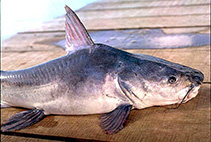 Ariopsis assimilis
Picture by Granados-Dieseldorff, P. & M. Christensen
Pictures | Google image
Picture by Granados-Dieseldorff, P. & M. Christensen
Classification / Names Common names | Synonyms | Catalog of Fishes(genus, species) | ITIS | CoL | WoRMS | Cloffa
Teleostei (teleosts) > Siluriformes (Catfishes) > Ariidae (Sea catfishes) > Ariinae
Etymology: Ariopsis: Greek, ari = very, strength, superiority + Greek, opsis = appearance (Ref. 45335).
More on author: Günther.
Etymology: Ariopsis: Greek, ari = very, strength, superiority + Greek, opsis = appearance (Ref. 45335).
More on author: Günther.
Environment: milieu / climate zone / depth range / distribution range Ecology
Freshwater; brackish; demersal. Tropical; 25°N - 15°N
Distribution Territories | FAO areas | Ecosystems | Occurrences | Point map | Introductions | Faunafri
Central America: Mexico, Belize, Honduras, Guatemala, Nicaragua, Costa Rica and Panama.
Size / Weight / Age
Maturity: Lm ? range ? - ? cm
Max length : 35.0 cm TL male/unsexed; (Ref. 58022); common length : 25.0 cm TL male/unsexed; (Ref. 3265)
Max length : 35.0 cm TL male/unsexed; (Ref. 58022); common length : 25.0 cm TL male/unsexed; (Ref. 3265)
Short description Identification keys | Morphology | Morphometrics
This species is distinguished from its congeners by the following characters: gill rakers on the first and second gill arches 31-36 rarely 37, on first gill arch only 14-18 rakers; osseous medial groove absent; fleshy medial groove of neurocranium conspicuous or inconspicuous, but never surpassing posterior margin of eyes; lateral margin of sphenotic straight, as wide anteriorly as medially; pterotic lateral margin markedly convex, sometimes angled; mouth 10.5-13.2% SL; cephalic shield at frontals area 8.8-10.1% SL; mesethmoid median portion narrow; mesethmoid medial notch narrow and deep; longer pectoral-fin spine 18.2-22.6% SL; external posterior branch of lateral ethmoid columnar and thin; fenestra delimited by mesethmoid and lateral ethmoid conspicuous (Ref. 116660).
Cross section: oval.
Cross section: oval.
Consumed mostly fresh.
Life cycle and mating behavior Maturity | Reproduction | Spawning | Eggs | Fecundity | Larvae
Main reference
Upload your references | References | Coordinator : Ferraris, Jr., Carl J. | Collaborators
Marceniuk, A.P. and N.A. Menezes, 2007. Systematics of the family Ariidae (Ostariophysi, Siluriformes), with a redefinition of the genera. Zootaxa 1416:1-126. (Ref. 58022)
IUCN Red List Status (Ref. 130435: Version 2025-2)
Least Concern (LC) ; Date assessed: 19 August 2018
CITES
Not Evaluated
Threat to humans
Traumatogenic (Ref. 58010)
Human uses
Fisheries: minor commercial
FAO - Publication: search | FishSource |
More information
Trophic ecology
Food items (preys)
Diet composition
Food consumption
Food rations
Predators
Food items (preys)
Diet composition
Food consumption
Food rations
Predators
Ecology
Ecology
Ecology
Population dynamics
Growth parameters
Max. ages / sizes
Length-weight rel.
Length-length rel.
Length-frequencies
Mass conversion
Recruitment
Abundance
Growth parameters
Max. ages / sizes
Length-weight rel.
Length-length rel.
Length-frequencies
Mass conversion
Recruitment
Abundance
Life cycle
Reproduction
Maturity
Maturity/Gills rel.
Fecundity
Spawning
Spawning aggregations
Eggs
Egg development
Larvae
Larval dynamics
Reproduction
Maturity
Maturity/Gills rel.
Fecundity
Spawning
Spawning aggregations
Eggs
Egg development
Larvae
Larval dynamics
Anatomy
Gill area
Brain
Otolith
Gill area
Brain
Otolith
Physiology
Body composition
Nutrients
Oxygen consumption
Swimming type
Swimming speed
Visual pigments
Fish sound
Diseases & Parasites
Toxicity (LC50s)
Body composition
Nutrients
Oxygen consumption
Swimming type
Swimming speed
Visual pigments
Fish sound
Diseases & Parasites
Toxicity (LC50s)
Genetics
Genome
Genetics
Heterozygosity
Heritability
Genetic Diversity
Genome
Genetics
Heterozygosity
Heritability
Genetic Diversity
Human related
Aquaculture systems
Aquaculture profiles
Strains
Ciguatera cases
Stamps, coins, misc.
Aquaculture systems
Aquaculture profiles
Strains
Ciguatera cases
Stamps, coins, misc.
Tools
E-book | Field guide | Identification keys | Length-frequency wizard | Life-history tool | Point map |
Catch-MSY |
Special reports
Download XML
Internet sources
AFORO (otoliths) | Aquatic Commons | BHL | Cloffa | Websites from users | Check FishWatcher | CISTI | Catalog of Fishes: genus, species | DiscoverLife | ECOTOX | FAO - Publication: search | Faunafri | Fishipedia | Fishtrace | GloBI | Google Books | Google Scholar | Google | IGFA World Record | National databases | OneZoom | Open Tree of Life | Otolith Atlas of Taiwan Fishes | PubMed | Reef Life Survey | Socotra Atlas | TreeBase | Tree of Life | Wikipedia: Go, Search |