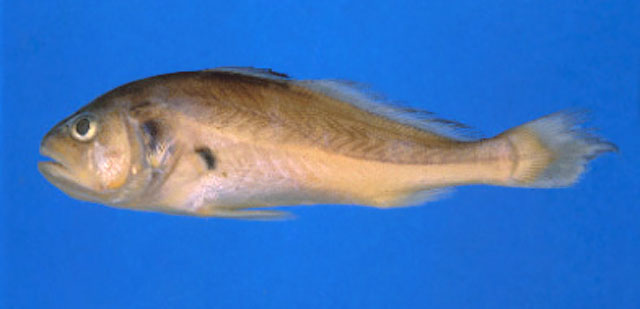
| Sciaenidae (Drums or croakers) |
| 80 cm TL (male/unsexed); max.weight: 4,500.0 g |
|
benthopelagic; freshwater, potamodromous |
| South America: Amazon, Orinoco, Paraná, Paraguay, and São Francisco River basins and rivers fo Guianas. |
|
Dorsal spines (total): 11-11; Dorsal soft rays (total): 30-34; Anal spines: 2-2; Anal soft rays: 5-6. Vertebral column extends into caudal fin. Black spot near the base of the pectorals. Dorsal posterior margin of operculum slightly toothed. |
| Occupies very diverse biotopes and carries out its biological cycle in freshwater as well as in brackish water (Ref. 27188). Juveniles feed on larvae of crustaceans (especially Macrobrachium), aquatic insects and copepods. Adults prey on fish. Captured during the rainy season (Ref. 35237). |
|
Least Concern (LC); Date assessed: 30 July 2019 Ref. (130435)
|
| harmless |
|
Recorded from the Caracu and Sao Pedro streams, both tributaries of the Paraná river (Ref. 26076) and Piracicaba river (Ref. 31923). Type localities: Rio Negro and Rio Branco, NMW 92.124 (holotype of Sciaena squamosissima, dry specimen); Rio Crixas, and affluent of Rion Araguay, MNHN 7503 (holotype of Johnius crouvina; Barra, at confluence of rio Grande and Rio São Francisco, NMW 57217 (holotype of Plagioscion francisci) (Ref. 36888). |
Source and more info: www.fishbase.org. For personal, classroom, and other internal use only. Not for publication.