
|
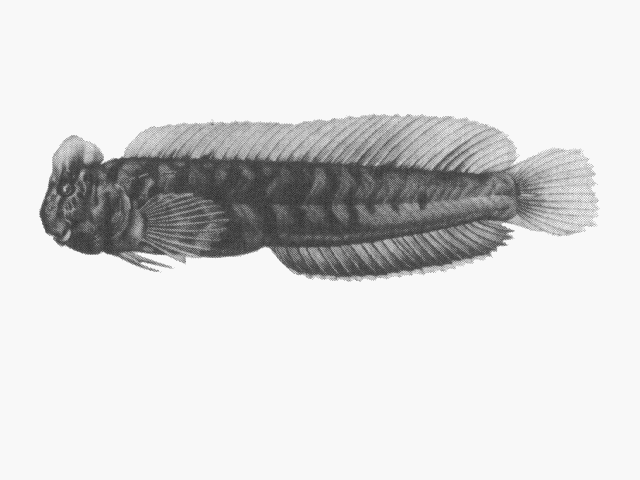
Omobranchus woodi (Gilchrist & Thompson, 1908) Kappie blenny |
|
|
photo by
SFSA |
| Family: | Blenniidae (Combtooth blennies), subfamily: Blenniinae | |||
| Max. size: | 8 cm SL (male/unsexed) | |||
| Environment: | demersal; brackish | |||
| Distribution: | Western Indian Ocean and Southeast Atlantic: Natal to Swartvlei. | |||
| Diagnosis: | Dorsal spines (total): 11-13; Dorsal soft rays (total): 19-21; Anal spines: 2-2; Anal soft rays: 20-22. Body with irregular dusky bands anteriorly; dark marks behind eye (Ref. 4404). | |||
| Biology: | Adults inhabit estuaries. Oviparous. Eggs are demersal and adhesive (Ref. 205), and are attached to the substrate via a filamentous, adhesive pad or pedestal (Ref. 94114). Larvae are planktonic, often found in shallow, coastal waters (Ref. 94114). | |||
| IUCN Red List Status: | Least Concern (LC); Date assessed: 28 March 2009 Ref. (130435) | |||
| Threat to humans: | harmless | |||