
|
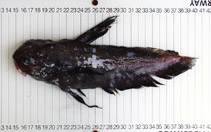
Guentherus altivela Osório, 1917 Jellynose |
|
|
photo by
Alvheim, O./Institute of Marine Research (IMR) |
| Family: | Ateleopodidae (Jellynose fishes) | |||
| Max. size: | 200 cm TL (male/unsexed) | |||
| Environment: | bathydemersal; marine; depth range 200 - 800 m | |||
| Distribution: | Eastern Atlantic: Portugal to South Africa. Eastern Central Pacific: Cabo Blanco and Quepos, Costa Rica and near Punta Jaqué, Panama (Ref. 9272); also Galapagos Islands (Ref. 9227). | |||
| Diagnosis: | Dorsal spines (total): 0-0; Dorsal soft rays (total): 11-13; Anal spines: 0-0; Anal soft rays: 69-80. Adults dark brown, juveniles transparent with black blotches along body and fins (Ref. 5528). | |||
| Biology: | Inhabits upper continental slopes (Ref. 27121). Benthic (Ref. 51024). Feeds on fishes (Ref. 6717). | |||
| IUCN Red List Status: | Least Concern (LC); Date assessed: 13 May 2013 Ref. (130435) | |||
| Threat to humans: | harmless | |||